


National Women's Health Week (NWHW)
From the FDA Office of Women's Health

National Women’s Health Week (NWHW) is an annual observance that begins on Mother’s Day. It is a time to empower women and girls of all ages to make their health a priority. Every year, the FDA’s Office of Women’s Health (OWH) selects a theme to inspire and equip women with the knowledge and tools to take charge of their well-being and live their healthiest lives.
This year, NWHW was observed May 10-16, 2026. As part of the FDA’s Office of Women’s Health Knowledge and News on Women’s Health (KNOWH) outreach initiative, and in collaboration with the FDA Human Foods Program (HFP), this year the FDA theme is “Know Your Nutrition.” The FDA plays an important role in supporting women’s nutrition by empowering consumers to build nutritious diets that support health and wellness and to help decrease the burden of diet-related diseases, like diabetes, obesity and hypertension. As food can be a vehicle for wellness, the FDA supports nutritious eating patterns by providing information that helps consumers make informed food choices and by encouraging industry to make healthier foods.
Knowing your nutrition can help women build a strong foundation for a healthy life. Understanding what’s in the foods we eat and recognizing the nutrients our bodies need at different stages of life can help support overall health and well-being. With greater awareness and informed choices, women can take meaningful steps to improve their health – starting with what’s on their plate.
On this page:
- Why nutrition matters for women
- FDA’s role in supporting women’s nutrition
- Women's nutritional needs across life stages
- What does healthy eating look like?
- Resources for health care providers and public health professionals
- Steps you can take to support your nutrition today
Why nutrition matters for women

Women play a powerful role in shaping the health of their families and communities. Research shows that women are often the primary decision makers when it comes to food choices, influencing not only their own nutrition but also the eating habits and long-term health of those around them.
Nutrition is more than just what we eat, it is also a key tool for supporting whole health. For women, this includes supporting mental well-being and fueling the body through different life stages. A balanced, nutrient-rich diet can also help prevent and manage chronic conditions such as heart disease, diabetes, and osteoporosis, which affect millions of women each year. By understanding and prioritizing nutrition, women can take an active role in protecting their health and the health of those they care for.
Explore Know Your Nutrition resources that can guide your nutritional journey:
- OWH and HFP Webcast Recording: Navigate Food Labels with Confidence: Understanding the Nutrition Facts Label, the Updated “Healthy” Claim, and Other Nutrition Claims webinar
- Knowledge and News on Women’s Health (KNOWH) Blog: Know Your Nutrition: Empowering Women to Make Informed Food Choices.
- NWHW 2026 Partner Toolkit: "Know Your Nutrition Partner Toolkit" for sample social media messages, graphics, and a blog post for women and health care professionals to learn more about nutrition.
- Short Motion Graphic: Know Your Nutrition watch to learn how FDA supports informed food choices for health and wellness.
- Educational Resources: FDA information on topics related to food safety, nutrition, labeling, and more: Nutrition Education Resources and Materials.
FDA’s role in supporting women’s nutrition
The FDA plays a critical role in empowering consumers to build diets that support health and wellness and reduce the burden of diet-related diseases. Efforts include the updated Nutrition Facts Label which provides important information such as how much added sugar is in a product and updated amounts for nutrients that matter most to women's health, like calcium, iron, and folate. These updates are especially helpful during pregnancy, breastfeeding, and menopause when women's nutritional needs change.
The FDA is also working on the development of a front-of-package labeling scheme and it updated what it means for a food to be called "healthy," making it easier for women to quickly identify foods that provide the nutrients they need. Through efforts to reduce sodium in processed foods and other nutrition programs, the FDA addresses diet-related chronic diseases that significantly impact women, including heart disease and osteoporosis. The agency also develops educational resources that are designed to help women understand nutrition information and make healthier food choices for themselves and their families.
Watch the NWHW 2026 webinar recording featuring nutrition experts from the FDA’s Human Foods Program to learn more about the FDA’s nutrition efforts and initiatives.
Women have unique nutritional needs across life stages
Women’s nutritional needs are not one-size-fits-all, they change throughout different stages of life. From adolescence and reproductive years to pregnancy, postpartum, menopause, midlife, and senior adulthood, the body requires different nutrients to support growth, energy, and overall health. Understanding these evolving needs can help women make informed choices that support their well-being at every stage.
Younger women
- Bone health is critical from adolescence through early adulthood. Getting enough calcium and vitamin D during this time helps build bone mass and can reduce the risk of osteoporosis later in life.
- Going to college or living independently is an important life transition, and establishing balanced eating patterns during this time can help set the foundation for lifelong healthy eating habits. Explore our college women’s health resources and visit your campus health center.
Pregnant women

- Food safety is especially important during pregnancy, as pregnant women are at a higher risk for getting foodborne illnesses such as listeriosis or toxoplasmosis.
- Key nutrients like folic acid, found in certain foods and dietary supplements, help lower the risk of brain and spine birth defects. Fish (that is low in mercury) provides important nutrients including omega-3 fatty acids.
- Explore resources such as USDA’s Nutrition Education & Food Safety | Food and Nutrition Service that can help support you and your family.
Lactating women
- Breastfeeding can benefit both you and your baby because breast milk provides nutrients that help protect against short and long-term illnesses, and it naturally adapts over time to meet your baby’s developmental needs.
- Increased nutritional needs including higher calorie intake, and proper hydration, are important to support the mother’s health, and the baby’s development.
Midlife and older women
- Aging can come with an increased risk for high blood pressure, diabetes, heart disease, and osteoporosis but good nutrition plays an important role in protecting you.
- Vitamins and minerals are essential for overall health, especially after menopause. Key nutrients include vitamin B12, vitamin B6, vitamin D, vitamin K and calcium. These nutrients can be obtained through your diet or through supplements. Talk with your health care provider about what’s right for you based on your needs.
- Maintaining a healthy dietary pattern and getting regular exercise may also help prevent weight gain during and after menopause.
What does healthy eating look like?

Dietary Guidelines for Americans 2025-2030 provides nutrition recommendations to support making healthier food choices and reduce the risk of chronic disease. The guidelines group foods into three main categories: protein, dairy and healthy fats; fruits and vegetables; and whole grains. Together, these categories make it easier to choose foods that support a healthy, balanced diet.

Read our latest Knowledge and News on Women's Health (KNOWH) blog post:
Know Your Nutrition: Empowering Women to Make Informed Food Choices.
Health care providers and public health professionals
We’ve compiled digital and print resources for you to share valuable information with your friends, family, community, and patients. They are easily downloadable and shareable and can be personalized to fit your messaging needs.
Explore NWHW 2026 Social Media Partner Toolkit for Know Your Nutrition resources for women and health care professionals, including sample social media messages and blog posts.
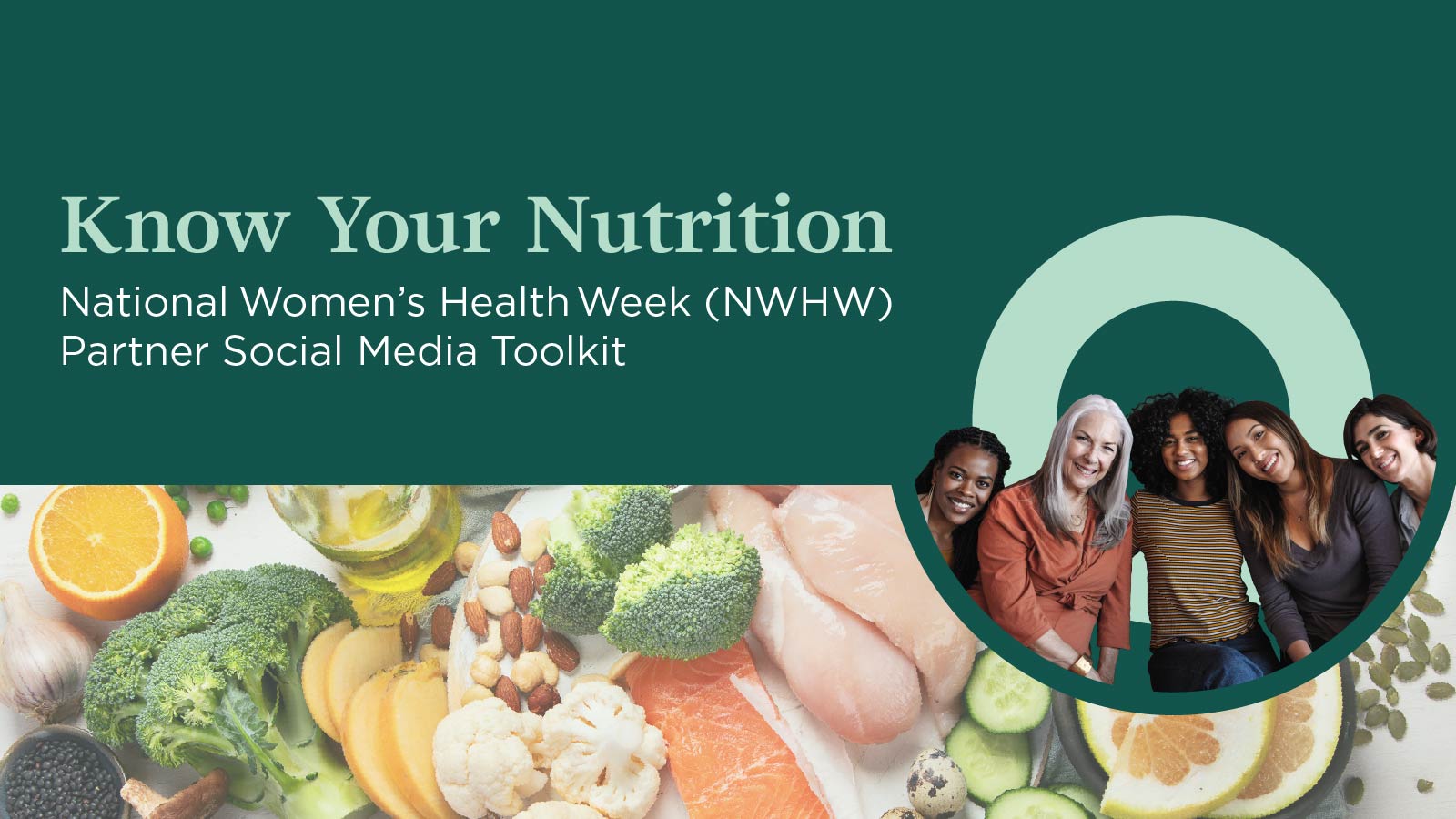
Know Your Nutrition by learning about FDA nutrition related topics on FDA social media channels. Follow FDA OWH on X (Twitter) and U.S. FDA on Facebook and Instagram to learn more about these topics.
This National Women’s Health Week learn steps you can take to support your nutrition today
- Use the Nutrition Facts Label to make informed choices.
- Talk with your health care provider on how to support your nutrition.
- Try out the FDA’s Interactive Nutrition Facts Label tool to learn more about each section of a label.
- Share this NWHW webpage and other FDA resources with another woman.
Join us in recognizing NWHW by making your health needs a priority. We encourage you to visit and share our women’s health resources and social media posts with your communities.
Related links
- OWH and HFP Webcast Recording: Navigate Food Labels with Confidence: Understanding the Nutrition Facts Label, the Updated “Healthy” Claim, and Other Nutrition Claims.
- KNOWH Blog: Know Your Nutrition: Empowering Women to Make Informed Food Choices
- FDA Nutrition Education Resources & Materials
- National Women's Health Week | HHS Office on Women's Health
- Maternal Diet and Breastfeeding | Centers for Disease Control and Prevention (CDC)
- SNAP for Students | U.S. Department of Agriculture (USDA)
- MyPlate.gov | U.S. Department of Agriculture (USDA)