


Know Your Nutrition: Empowering Women to Make Informed Food Choices
Knowledge and News on Women’s Health (KNOWH) blog from FDA Office of Women’s Health

The FDA’s Office of Women’s Health (OWH) celebrates National Women's Health Week (NWHW), designed to inspire and equip women of all ages with the knowledge and tools to take charge of their well-being, live their healthiest lives, and help prevent chronic diseases. Each year, OWH celebrates NWHW by spotlighting key health topics that affect women at every stage of life and also support OWH’s Knowledge and News on Women’s Health (KNOWH) outreach initiative. The FDA OWH’s NWHW theme for this year is “Know Your Nutrition.”
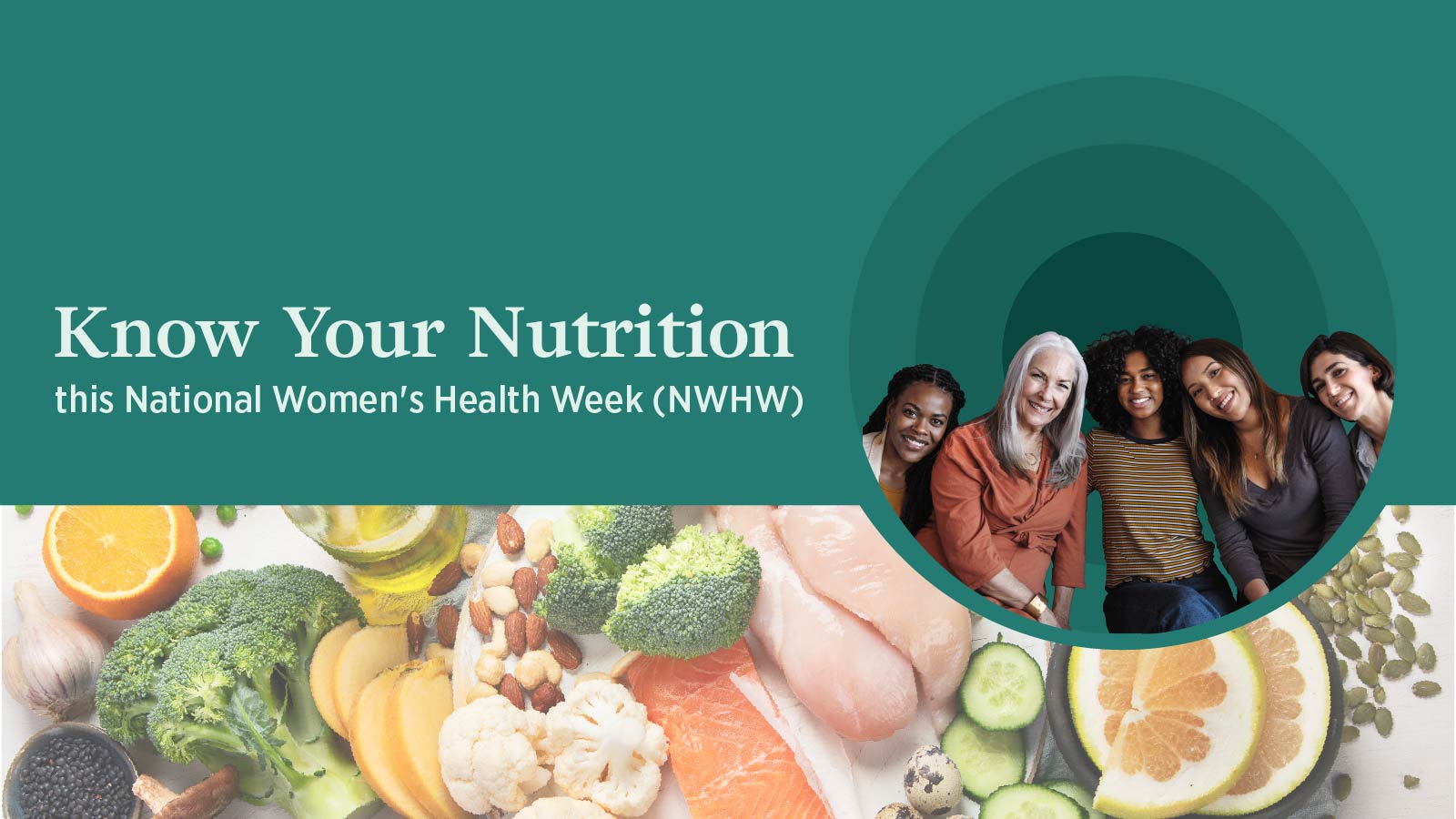
Nutrition plays an important role in overall health and well-being. While this blog focuses on women, who, as research shows, often serve as primary decision-makers for household food and meal planning, the information shared here is relevant to anyone interested in making informed food choices and supporting long-term health. The FDA offers resources to help women make informed food choices and has updated several nutrition policies and regulations to reflect current nutrition science and make it easier for consumers to identify healthier options. From the updated "healthy" claim to clearer "gluten-free" standards and proposed “front-of-package” labels, these changes are designed to provide you with the tools and information you need to build nutritious diets that promote well-being over time.
In honor of NWHW, this blog explores how FDA updates and initiatives can help you navigate the grocery store with confidence, understand key nutrients that matter for women's health, and make choices that support you and your family's dietary goals. Read our new Q&A blog to learn more about the FDA’s ongoing work and educational resources from the FDA’s Human Foods Program.
Role of women in food decision making
- How do recent FDA nutrition regulatory updates recognize and support the critical role women/consumers play in buying food, meal planning, and caregiving in their households?
Women are often juggling multiple responsibilities at work and at home, including purchasing food for themselves and their family members, planning and preparing meals, and providing care for loved ones. When selecting foods in today’s fast-paced world, having clear, science-based information on food labels that is visible and available at-a-glance can help with making good choices that are part of a healthy dietary pattern. The FDA helps to support nutritious eating patterns in part by providing information so that consumers can identify healthier food choices and the FDA's recent regulatory actions provide clear, science-based information on food labels to help women make informed choices.
Ultra-processed foods
- What is the FDA doing about ultra-processed foods?
Researchers have found links between the consumption of highly processed foods (commonly called ultra-processed foods, or UPFs) and a range of negative health outcomes, including cardiovascular disease, obesity and certain cancers. Some have estimated that children get over 60% of their calories from such foods. The FDA is working with the U.S. Department of Agriculture (USDA) as part of a joint effort to develop a uniform definition of UPFs. Establishing a uniform definition will enable federal agencies and others to develop consistent policies and programs focused on UPFs. In July 2025, the FDA and USDA issued a Request for Information to gather information and data from the public on a range of topics related to UPFs, including what factors and criteria should be included in a uniform definition of UPFs. Additionally, the FDA announced it was partnering with the National Institutes of Health on a joint Nutrition Regulatory Science Program. The program is, among other things, examining the role that consumption of ultra-processed foods may play in people’s health.
Added sugars, sodium reduction efforts, and dietary risk reduction
- What is the FDA doing to reduce diet-related health risks posed by high sodium intake and added sugars?
The U.S. is facing a growing epidemic of preventable diet-related chronic diseases, including cardiovascular disease, diabetes, and obesity, which significantly affect many women. High consumption of added sugars makes it harder to meet nutrient needs within calorie limits. Excess sodium intake can raise blood pressure, a major risk factor for heart disease and stroke, which are leading causes of death for women.
To address these risks, the FDA is taking a multi-faceted approach. For sodium reduction, the agency has established voluntary targets for industry for processed, packaged, and prepared foods, which account for more than 70% of sodium intake. We are monitoring progress and engaging with stakeholders to help lower sodium levels in the food supply. These efforts aim to help reduce average sodium consumption, moving closer to the recommended daily limit of 2,300 mg. For more information about the FDA’s sodium reduction efforts, visit: Sodium Reduction in the Food Supply.
For added sugars, the FDA updated the Nutrition Facts Label to include both the gram amount and percent Daily Value (%DV) for added sugars, helping consumers make more informed choices. The agency has also set limits on added sugars for products labeled as “healthy” and is proposing front-of-package labeling to provide clearer, interpretive information about sugar content. For more information on FDA strategies to assist consumers in reducing their consumption of added sugars visit Human Foods Program 2026 Priority Deliverables.
Together, these initiatives are designed to empower consumers, encourage industry reformulation, and ultimately reduce diet-related health risks that disproportionately impact women.
Front-of-package nutrition labeling initiatives
- How could the front-of-package labels influence everyday food purchasing decisions?
Front-of-package nutrition labeling can provide accessible, at-a-glance information to help consumers quickly and easily identify how foods can be part of a healthy diet. The FDA's proposed front-of-package (FOP) nutrition label would complement the Nutrition Facts label that is required on most food packages and would help consumers by providing an accessible description of the numerical information found in the Nutrition Facts label. This important initiative is expected to empower women to identify how foods can fit into a healthy diet and could result in manufacturers reformulating products to make them healthier.

Updated “Healthy” nutrient content claim
- What is the “healthy” nutrient content claim and how have the requirements for the claim changed to better reflect current nutrition science and dietary recommendations?
The “healthy” nutrient content claim is an FDA-regulated labeling term that indicates a food meets specific criteria to support a healthy diet.
The original requirements for the “healthy” claim were based on individual nutrients. The current nutrition science and dietary recommendations have shifted away from only focusing on individual nutrients to also focusing on healthy dietary patterns and the consumption of food groups which include nutrient dense choices. The updated requirements incorporate recommended food groups like fruits, vegetables, protein foods, dairy, and whole grains, and establish limits for added sugars, saturated fat, and sodium content. Limiting added sugars in the diet aligns with current nutrition science, the Dietary Guidelines for Americans, and the updated Nutrition Facts label, which now includes the declaration of added sugars.
- How does the new criteria for labeling a food as “healthy” help women make more informed choices when shopping for food?
Most people in the U.S. do not eat enough of the recommended food groups, including fruits, vegetables, dairy, and whole grains, while consuming too much added sugars, saturated fat, and sodium. The updated “healthy” claim can help empower women by providing a way to indicate that a food, because of its nutrient content, is particularly useful in building healthier dietary patterns.
With the new criteria, more foods and beverages that can serve as a foundation for healthy dietary patterns will now qualify for the “healthy” claim, which could make it easier for women to identify them when shopping. Examples of foods and beverages that qualify for the “healthy” claim include nuts and seeds; higher fat fish such as salmon; olive oil; and water.
Nutrition Facts Label
- What information on the Nutrition Facts label can be of particular importance for women to help them make more informed choices?
The Nutrition Facts label provides science-based information to help women make more informed choices. The Percent Daily Value (%DV) shows how much a nutrient in a serving of food contributes to a total daily diet. The %DV is calculated based on Daily Values, which are reference amounts of nutrients to consume or not to exceed each day. The FDA has updated the Daily Values (DV) based on newer scientific evidence and established DVs for infants 6 through 12 months of age; children 1 through 3 years of age; and pregnant and lactating women. Products specifically formulated and labeled for these populations display a %DV based on their specific nutrient needs, making it easier to choose foods that meet their nutritional requirements.
In addition, the label also includes information on nutrients that are of particular interest for women’s health such as vitamin D and calcium, to support bone health; iron, to help prevent anemia; and sodium and potassium, which are important for blood pressure management. The Nutrition Facts label also provides amounts and %DVs for other nutrients that are added to foods (e.g., folic acid which is important for maternal and fetal health) or discussed in claims on the label. More information on how to use the label can be found at: Nutrition Education Resources & Materials.
Definition of “Gluten-Free”
- What is celiac disease, how does it affect women, and what does a ‘gluten-free’ label mean on food products?
Celiac disease is an autoimmune disorder in which consuming gluten (a protein found in wheat, barley, and rye) damages the small intestine and interferes with nutrient absorption. It affects about 1 in 100 people in the United States and is diagnosed about 2–3 times more often in women, who may also experience related complications such as anemia, bone loss, and reproductive health issues. For people with celiac disease, avoiding gluten is essential to managing their condition.
When a "gluten-free" claim is made on a food product, it means that consumers can be confident that items labeled as such meet a defined standard for gluten content. Under FDA regulations foods labeled as "gluten-free," "without gluten," "free of gluten," or "no gluten" may not contain more than 20 parts per million (ppm) of gluten. This limit was established based on scientific evidence showing that the majority of people with celiac disease can tolerate foods containing this level of gluten. This applies to packaged foods including dietary supplements.
The FDA's standardized 'gluten-free' definition ensures consistency across products, establishes a scientifically based safety threshold for people with gluten sensitivity, and allows consumers to shop confidently knowing products meet federal standards. While the 'gluten-free' claim is voluntary, manufacturers who use it must comply with the FDA's requirements. The FDA can take action against manufacturers who use the "gluten-free" claim on products that don't meet these standards, helping to protect consumers from mislabeled products. Visit FDA-Gluten and Food Labeling to learn more.

Dietary guidance alignment and the FDA’s public health strategy
- How do the FDA’s nutrition policies align with the Dietary Guidelines for Americans and support the prevention of chronic diseases?
Improving nutrition is one of the most effective public health interventions for reducing preventable diet-related chronic diseases, such as cardiovascular disease, diabetes, and obesity. The FDA works to help empower consumers to build nutritious diets that support health and wellness by encouraging real, nutrient dense foods. The FDA's nutrition initiatives and the Human Foods Program 2026 Priority Deliverables are informed by and designed to advance the recommendations of the Dietary Guidelines for Americans.
- What should consumers know about the implementation of these nutrition-related updates and available educational resources?
The latest information about the implementation of nutrition-related policies and regulations can be found at: FDA’s Nutrition Initiatives. A variety of nutrition education resources for consumers (including kids and families), health educators, physicians and healthcare professionals can be found at: Nutrition Education Resources & Materials.
This NWHW, take time to Know Your Nutrition with FDA resources. Knowing your nutrition can help you build a strong foundation for a healthy life. For more information about the FDA’s Human Foods Program visit the HFP webpage and for resources and materials on other women’s health topics, visit www.fda.gov/womens.
Related links
- OWH and HFP Webcast Recording: Navigate Food Labels with Confidence: Understanding the Nutrition Facts Label, the Updated “Healthy” Claim, and Other Nutrition Claims.
- FDA National Women's Health Week
- FDA Nutrition Education Resources & Materials
- National Women's Health Week | HHS Office on Women's Health
- Maternal Diet and Breastfeeding | Centers for Disease Control and Prevention (CDC)
- SNAP for Students | .S. Department of Agriculture (USDA)
- MyPlate.gov | U.S. Department of Agriculture (USDA)