


Webcast | Virtual
Event Title
FDA Grand Rounds – Environmental Longitudinal Study Insights into Shigatoxigenic E. coli Dynamics Across California’s Central Coastal Agricultural Region
July 9, 2026
- Date:
- July 9, 2026
- Time:
- 12:00 p.m. - 1:00 p.m. ET
Speakers
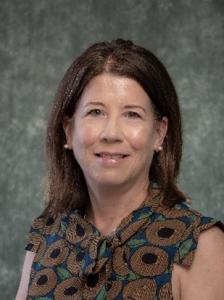
Julie Ann Kase, Ph.D.
Research Microbiologist
Microbial Methods Development Branch
Division of Food and Environmental Safety
Human Foods Program
U.S. Food and Drug Administration
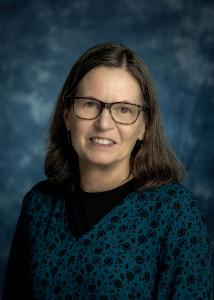
Susan R. Leonard, Ph.D.
Research Biologist
Division of Food Safety Genomics
Office of Applied Microbiology and Technology
Office of Laboratory Operations and Applied Science
Human Foods Program
U.S. Food and Drug Administration
About the Speakers
Julie Ann Kase is a senior research microbiologist in the Microbial Methods Development Branch within the Division of Food and Environmental Safety in FDA’s Human Foods Program. Dr. Kase joined FDA in 2008 and quickly established herself as an agency subject matter expert for Shigatoxigenic E. coli (STEC). She has spent over 25 years at the lab bench encompassing work as a public health scientist and food microbiologist and has authored dozens of peer-reviewed publications and book chapters. Her research activities have touched upon the transmission and detection of infectious agents in the environment, the microbiocidal efficacy of chemical disinfectants, and improved methods to culture and identify pathogenic STEC from various matrices. Much of her recent work involved leading longitudinal studies surveying the produce growing environment in both Arizona and California for foodborne pathogens. Dr. Kase has served on numerous committees including the National Advisory Committee on Microbiological Criteria for Foods (NACMCF), the FDA Bacteriological Analytical Manual (BAM) Council, the Institute for the Advancement of Food and Nutrition Sciences Committee on Food Microbiology, and currently serves as Chair of the FDA STEC Advisory Council.
Dr. Susan Leonard is a research biologist in the Division of Food Safety Genomics, Office of Applied Microbiology and Technology, at the FDA. Her work leverages genomic techniques, including whole genome sequencing, transcriptomics, and metagenomics, to address diverse pre- and post-harvest food safety challenges. Currently, Dr. Leonard leads initiatives to optimize culture-independent genomic methods for detecting and characterizing Shiga toxin-producing E. coli (STEC) and Cyclospora. She also applies metagenomic source-tracking to better understand pathogen contamination routes in farm production environments. Dr. Leonard recently co-led longitudinal environmental studies in agricultural regions with histories of STEC outbreaks and spearheaded the development of a genotyping method for Cyclospora cayetanensis. Before joining the FDA, Dr. Leonard earned her Ph.D. in Molecular Microbiology and Immunology from the University of Maryland, Baltimore, focusing on STEC pathogenicity, followed by postdoctoral research on STEC genome characterization at the Institute for Genome Sciences.
About the Presentation
This lecture will present an analysis of Shigatoxigenic E. coli (STEC) prevalence in surface waters, sediment, soil, air and animal feces sampled across the Central Coastal agricultural growing region of California. Integrating findings from a multi-year environmental study, the presentation explores how STEC moves through and persists over time within a complex agricultural ecosystem.
Learning Objectives
- Describe the role of environmental longitudinal studies in identifying food safety risks.
- Identify primary vectors and pathways that facilitate Shigatoxigenic E. coli persistence and dissemination within the agricultural environment.
- Explain how genomic methods are used for source-tracking to understand transmission dynamics in environmental studies.
To Attend
MS Teams Link (no registration is necessary)
For technical assistance please contact: Rakesh.Raghuwanshi@fda.hhs.gov; Ayan.Ibrahim@fda.hhs.gov
Continuing Medical Education (CME) Credit
As CME credit is being offered through the Johns Hopkins University School of Medicine, those wishing to obtain CME credit must create a user profile on the Hopkins Cloud CME platform. If you have never had a CME certificate/credits awarded and need a user profile created, please log onto https://hopkinscme.cloud-cme.com and click the “Sign Up Now” button. DO NOT create a new account if you have already received credit for Johns Hopkins CME activities at any time. Click on Forgot Password if you already have an email on file with the JHU OCME office. Instructions on how to claim the CME credit will be provided during the Grand Rounds presentation, but participants must already have a Hopkins Cloud CME user profile before the presentation.
Accreditation Statement
The Johns Hopkins University School of Medicine is accredited by the Accreditation Council for Continuing Medical Education (ACCME) to provide continuing medical education for physicians.
Credit Designation Statement
The Johns Hopkins University School of Medicine designates this live activity for a maximum of 1 AMA PRA Category 1 Credit. Physicians should claim only the credit commensurate with the extent of their participation in the activity. This regularly scheduled series has been approved for a 52-week cycle beginning October 23, 2025.
Other Credits
Reciprocity exists with the following boards that accept AMA PRA Category 1 Credits™ from organizations accredited by the ACCME:
- American Nurses Credentialing Center
- American Academy of Nurse Practitioners National Certification Program
- National Commission on Certification of Physicians Assistants
- Psychologists: JHUSOM is authorized by the Maryland State Board of Examiners of Psychologists as a provider of continuing education. The JHUSOM maintains responsibility for this program.
- Social Workers: The Maryland Board of Social Work Examiners certifies that this program meets the criteria for 1 credit hour of Category 1 of continuing education for social workers licensed in Maryland. The JHUSOM is an approved sponsor of the Maryland Board of Social Work Examiners for continuing education credits for licensed social workers in Maryland.
These professionals should submit their transcript to their respective boards to convert their credits to CEUs.
Policy on Presenter and Provider Disclosure
It is the policy of the Johns Hopkins University School of Medicine that the presenter globally disclose conflicts of interest and any discussion of unlabeled/unapproved uses of drugs or devices during their presentation(s). The Johns Hopkins University School of Medicine OCME has established policies in place to identify and mitigate relevant conflicts of interest prior to this educational activity. Detailed disclosure will be made prior to presentation of the education.