


Drug Trials Snapshot: TRYPTYR
HOW TO USE THIS SNAPSHOT
The information provided in Snapshots highlights who participated in the key clinical trials that supported the original FDA approval of this drug, and whether there were differences among sex, race, age, and ethnic groups. The “MORE INFO” bar shows more detailed, technical content for each section. The Snapshot is intended as one tool for consumers to use when discussing the risks and benefits of the drugs.
LIMITATIONS OF THIS SNAPSHOT:
Do not rely on Snapshots to make decisions regarding medical care. Always speak to your healthcare provider about the benefits and risks of a drug.
Some of the information in this Snapshot is for presentation purposes and does not represent the approved conditions of use of this drug. Refer to the TRYPTYR Prescribing Information for all the approved conditions of use of this drug (e.g., indication(s), population(s), dosing regimen(s), safety information).
Snapshots are limited to the information available at the time of the original approval of the drug and do not provide information on who participated in clinical trials that supported later approvals for additional uses of the drug (if applicable).
TRYPTYR (acoltremon)
trip’tir
Alcon Laboratories, Inc
Original Approval date: May 28, 2025
DRUG TRIALS SNAPSHOT SUMMARY:
What is the drug for?
TRYPTYR is a TRPM8 thermoreceptor agonist that treats the signs and symptoms of dry eye disease (DED) in adults with history of DED.
How is this drug used?
TRYPTYR is available as an eye drop that is instilled one drop in each eye twice daily (approximately 12 hours apart).
Who participated in the clinical trials?
The FDA approved TRYPTYR based on evidence from two clinical trials (COMET-2 and COMET-3) of 931 patients with DED. The trials were conducted at 46 sites in the United States.
Two additional studies: COMET-1 and COMET-4 were included in the evaluation of safety benefit of TRYPTYR. The number of patients representing efficacy findings may differ from the number of patients representing safety findings due to different pools of study participants analyzed for efficacy and safety.
How were the trials designed?
The efficacy of TRYPTYR was evaluated in two clinical trials of 931 patients with DED.
Both COMET-2 and COMET-3 are Phase 3, multicenter, vehicle-controlled, double-masked, randomized studies whose primary endpoint was proportion of subjects with ≥10 mm increase from baseline in unanesthetized Schirmer Score on Day 14.
COMET-1 was a Phase 2b multicenter, vehicle-controlled, double-masked, randomized study conducted at 15 sites in the United States which randomized 369 subjects with a history of DED.
COMET-4 was a multicenter, vehicle-controlled, double-masked, randomized study conducted at approximately 10 sites in the United States which enrolled 275 subjects with a history of DED.
Study COMET-2 and COMET-3 have a similar design. Each study is a multicenter, randomized, double-masked, vehicle-controlled Phase 3 study. The primary objective of these studies was to evaluate the safety and efficacy of TRYPTYR compared to vehicle. Subjects 30 years and older with a history of artificial tear use for DED were qualified based on signs and symptoms of DED at screening, and were requalified at Baseline (Day 1) following a 14-day vehicle run-in. COMET 2 enrolled 465 subjects at 23 study sites, whereas COMET-3 enrolled 466 subjects at 23 sites.
DEMOGRAPHICS SNAPSHOT
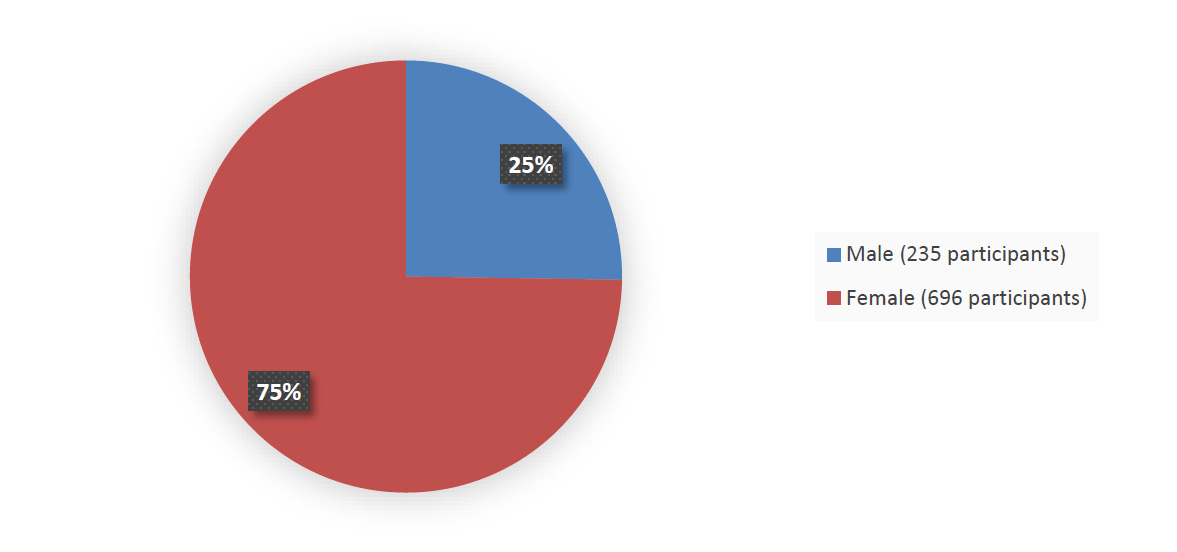
Figure 1 summarizes how many male and female participants were enrolled in the combined clinical trials used to evaluate the efficacy of TRYPTYR.
Figure 1. Baseline Demographics by Sex, Efficacy Population
Source: Adapted from FDA Review
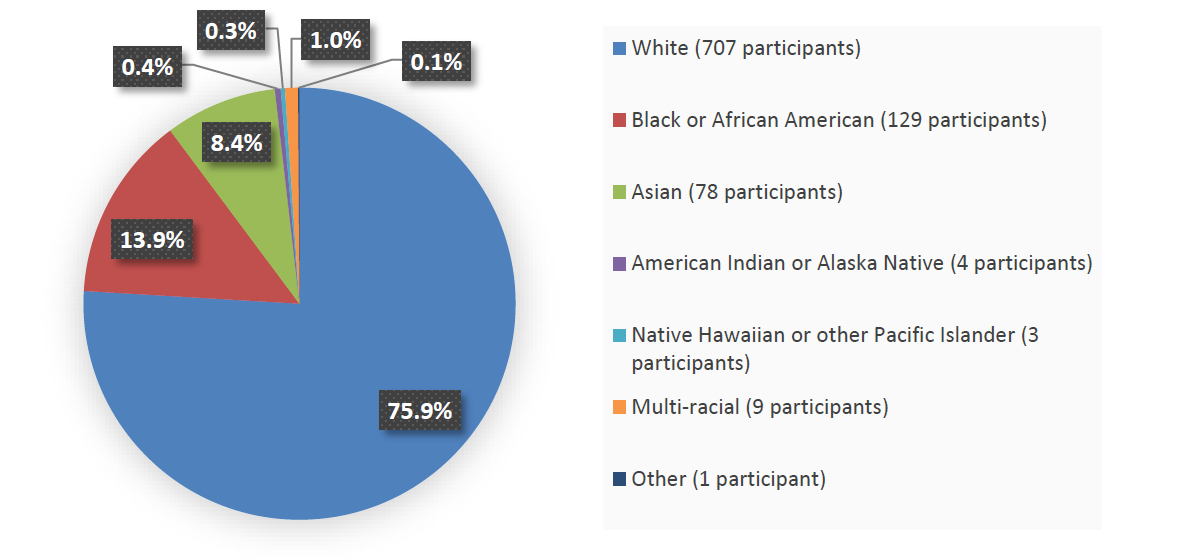
Figure 2 summarizes how many participants by race, were enrolled in the combined clinical trials used to evaluate the efficacy of TRYPTYR.
Figure 2. Baseline Demographics by Race, Efficacy Population
Source: Adapted from FDA Review
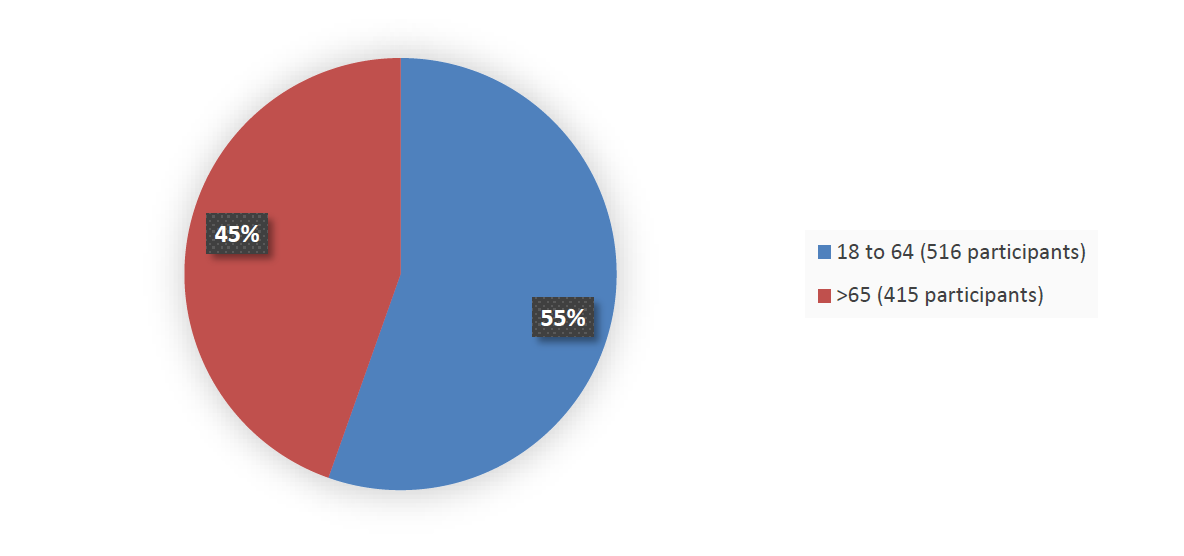
Figure 3 summarizes how many participants by age were enrolled in the combined clinical trials used to evaluate the efficacy of TRYPTYR.
Figure 3. Baseline Demographics by Age, Efficacy Population
Source: Adapted from FDA Review
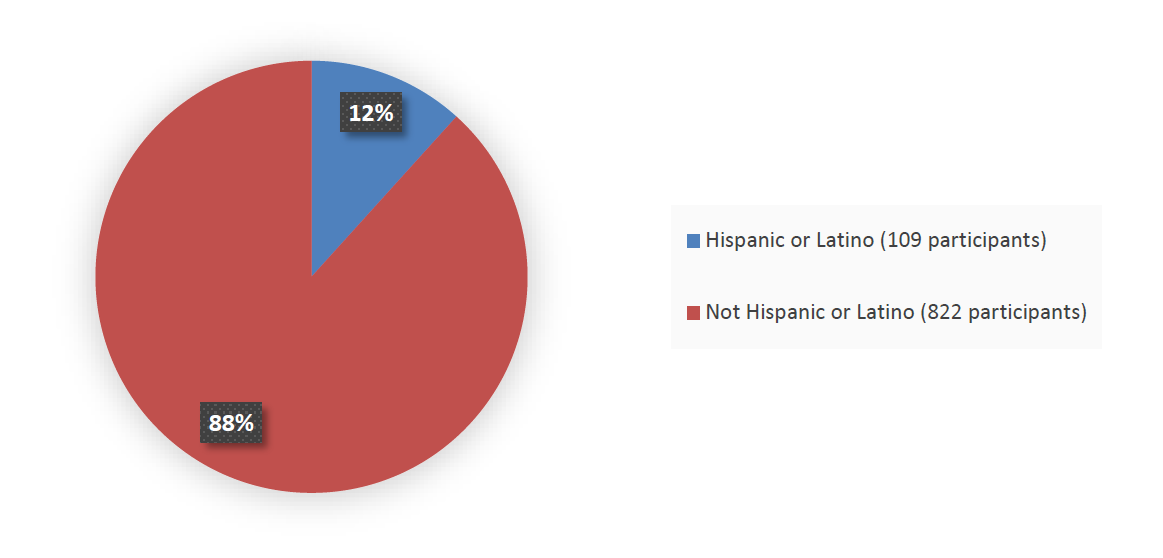
Figure 4 summarizes how many participants by ethnicity were enrolled in the combined phase 3 clinical trials used to evaluate the efficacy of TRYPTYR.
Figure 4. Baseline Demographics by Ethnicity, Efficacy Population
Source: Adapted from FDA Review
Who participated in the trials?
Table 1. Baseline Demographics of Efficacy Trials by Age, Race, Sex, and Ethnicity
| Demographic | TRYPTYR N=462 | Vehicle N=469 | All Subjects N=931 |
|---|---|---|---|
| Sex | |||
Male | 112 (24.2) | 123 (26.2) | 235 (25.2) |
Female | 350 (75.8) | 346 (73.8) | 696 (74.8) |
| Age category, years | |||
18 to 64 | 252 (54.5) | 264 (56.3) | 516 (55.4) |
≥65 | 210 (45.5) | 205 (43.7) | 415 (44.6) |
| Race | |||
American Indian or Alaska Native | 2 (0.4) | 2 (0.4) | 4 (0.4) |
Asian | 40 (8.7) | 38 (8.1) | 78 (8.4) |
Black or African American | 70 (15.2) | 59 (12.6) | 129 (13.9) |
Native Hawaiian or other Pacific Islander | 2 (0.4) | 1 (0.2) | 3 (0.3) |
White | 342 (74.0) | 365 (77.8) | 707 (75.9) |
Multi-racial | 6 (1.3) | 3 (0.6) | 9 (1.0) |
Other | 0 | 1 (0.2) | 1 (0.1) |
| Ethnicity | |||
Hispanic or Latino | 47 (10.2) | 62 (13.2) | 109 (11.7) |
Not Hispanic or Latino | 415 (89.8) | 407 (86.8) | 822 (88.3) |
Source: Adapted from FDA Review
What are the benefits of this drug?
TRYPTYR demonstrated a statistically significant increase in Schirmer tear score, improvement in tear production in two randomized, double-masked, vehicle-controlled multisite clinical studies (COMET-2 and COMET-3) in subjects with a diagnosis of dry eyes. The difference in the proportion of subjects who achieved ≥10 mm increase from baseline in unanesthetized Schirmer Score on Day 14 was 34.4% (95% CI: 26.9, 42.0) and 38.8% (95% CI: 30.8, 46.8) for COMET-2 and COMET-3, respectively.
What are the benefits of this drug (results of trials used to assess efficacy)?
Table 2. Proportion of Subjects Who Achieved ≥10 mm Increase From Pre-Drop at Baseline to Post-Drop on Day 14 in Study Eye Unanesthetized Schirmer Score, ITT Population
| Parameter | COMET-2 | COMET-3 | All Subjects | |||
|---|---|---|---|---|---|---|
| TRYPTYR N=230 | Vehicle N=235 | TRYPTYR N=232 | Vehicle N=234 | TRYPTYR N=462 | Vehicle N=469 | |
| ≥10 mm increase in tear production at Day 14 | 42.60% | 8.20% | 53.20% | 14.40% | 48.30% | 10.90% |
| Difference (95% CI) | 34.4% (26.9, 42.0) | 38.8% (30.8, 46.8) | 37.4% (31.9, 42.9) | |||
| p-value versus vehicle | <0.0001 | <0.0001 | <0.0001 | |||
Source: Adapted from FDA Review
Abbreviations: CI, confidence interval; ITT, intent-to-treat
Were there any differences in how well the drug worked in clinical trials among sex, race, and age?
- Sex: TRYPTYR worked similarly in males and females.
- Race: TRYPTYR worked better in White and Black or African American patients as compared to Asian group.
- Age: TRYPTYR worked better in patients aged 65 and older.
Were there any differences in how well the drug worked in clinical trials among sex, race and age groups?
While the observed treatment effects in females (40.0% [95% CI: 33.8, 46.3; p<0.0001]), was higher than that observed in males, (29.5% [95% CI: 18.3, 40.8; p<0.0001]), the 95% CIs for the two subgroups overlap.
A greater proportion with a ≥10 mm increase in unanesthetized Schirmer scores was observed in Black (45.9% [95% CI: 32.3, 59.5; p<0.0001]) and White (38.8% [95% CI: 32.4, 45.2; p<0.0001]) subgroups compared to the Asian subgroup (9.6% [95% CI: 7.6, 26.8; p=0.2893]). The 95% CIs for difference for Black and White subgroups overlap, but the 95% CI for difference in the Asian subgroup did not overlap with the other subgroups.
A comparison of subjects between 18 and 64 years of age and 65 years of age and older showed a greater proportion with a ≥10 mm increase in unanesthetized Schirmer scores in older subjects (≥65 years) compared to younger subjects. The difference in proportions on Day 14 was 26.7% (95% CI: 19.3, 34.1; p<0.0001) for subjects between 18 and 64 years and 50.2% (95% CI: 42.2, 58.1; p<0.0001) for subjects 65 years and older, with no overlap between the 95% CI on the treatment effects across the two subgroups.
Table 3. Summary of Proportion Difference Between Treatments in Subjects Who Achieved ≥10 mm Increase in Unanesthetized Schirmer Scores by Subgroup, ITT Population
| Subgroup | TRYPTYR n | Vehicle n | Proportion Difference (95% CI) |
|---|---|---|---|
| Overall | 439 | 450 | 37.4 (31.9, 42.9) |
| Sex | |||
Male | 107 | 119 | 29.5 (18.3, 40.8) |
Female | 332 | 331 | 40.0 (33.8, 46.3) |
| Age group, years | |||
18 to 64 | 238 | 251 | 26.7 (19.3, 34.1) |
≥65 | 201 | 199 | 50.2 (42.2, 58.1) |
| Race | |||
White | 322 | 349 | 38.8 (32.4, 45.2) |
Black or African American | 68 | 57 | 45.9 (32.3, 59.5) |
Asian | 39 | 37 | 9.6 (-7.6, 26.8) |
Source: Adapted from FDA Review
Abbreviations: CI, confidence interval; ITT, intent-to-treat; n, number of subjects with non-missing assessments at both Baseline and Day 14 visit
What are the possible side effects?
All serious events were assessed as not related to treatment, were generally nonocular in nature, and occurred at a higher incidence in the vehicle (22 subjects, 3.2%) group compared to either 0.0014% TRYPTYR (1 subject, 0.8%) or 0.003% TRYPTYR (12 subjects, 1.6%) groups in the integrated safety population.
The most common treatment-emergent adverse event experienced during the clinical studies was instillation site pain (burning or stinging) events: 49.7% in the TRYPTYR group and 4.1% in the vehicle group.
What are the possible side effects (results of trials used to assess safety)?
Table 4. Overview of Treatment-Emergent Adverse Events Summary, Pooled Analyses, Studies COMET-1, COMET-2, COMET-3, and COMET-4
| Adverse Event | 0.0014% TRYPTYR N=121 n (%) | 0.003% TRYPTYR N=766 n (%) | Vehicle N=688 n (%) |
|---|---|---|---|
| Number of TEAEs | 83 | 723 | 319 |
Number of subjects with at least one TEAE | 57 (47.1) | 456 (59.5) | 202 (29.4) |
| Number of ocular TEAEs | 63 | 491 | 109 |
Number of subjects with at least one ocular TEAE | 51 (42.1) | 409 (53.4) | 83 (12.1) |
| Number of nonocular TEAEs | 20 | 232 | 210 |
Number of subjects with at least one nonocular TEAE | 18 (14.9) | 154 (20.1) | 136 (19.8) |
| Number of serious TEAEs | 1 | 13 | 27 |
Number of subjects with at least one serious TEAE | 1 (0.8) | 12 (1.6) | 22 (3.2) |
| Number of TEAEs related to study interventiona | 53 | 441 | 56 |
Number of subjects with at least one TEAE related to study interventiona | 46 (38.0) | 392 (51.2) | 46 (6.7) |
| Number of subjects with TEAEs by maximum severityb | |||
Mild | 50 (41.3) | 401 (52.3) | 150 (21.8) |
Moderate | 5 (4.1) | 46 (6.0) | 35 (5.1) |
Severe | 2 (1.7) | 9 (1.2) | 17 (2.5) |
| Number of subjects with TEAEs by strongest relationship to study interventionb | |||
Not related | 9 (7.4) | 50 (6.5) | 139 (20.2) |
Unlikely related | 2 (1.7) | 14 (1.8) | 17 (2.5) |
Possibly related | 8 (6.6) | 41 (5.4) | 16 (2.3) |
Related | 38 (31.4) | 351 (45.8) | 30 (4.4) |
| Number of TEAEs leading to study intervention discontinuation | 3 | 28 | 23 |
Number of subjects with at least one TEAE leading to study intervention discontinuation | 3 (2.5) | 16 (2.1) | 19 (2.8) |
Source: Adapted from FDA Review
Note: TEAEs are defined as any event that occurs or worsens on or after the day that randomized study intervention is initiated. Percentages are based on the total number of subjects (N) in the respective treatment group for the population being analyzed.
a TEAEs related to study intervention include TEAEs that are possibly related or related to study intervention.
b If a subject experienced more than one adverse event, the subject is counted only once for the maximum severity or strongest relationship to study intervention.
Abbreviations: TEAE, treatment-emergent adverse event
Were there any differences in side effects among sex, race, and age?
- Sex: The occurrence of side effects was similar in males and females.
- Race: The occurrence of side effects was similar across race subgroups.
- Age: The occurrence of side effects was similar in patients younger and older than 65 years of age.
Were there any differences in side effects of the clinical trials among sex, race, and age groups?
Table 5. Overview of Adverse Events by Demographic Subgroup, Safety Population
| Characteristic | 0.0014% TRYPTYR N=121 n/Ns (%) | 0.003% TRYPTYR N=766 n/Ns (%) | Vehicle N=688 n/Ns (%) |
|---|---|---|---|
| Sex | |||
Female | 42/82 (51.2) | 360/572 (62.9) | 161/503 (32.0) |
Male | 15/39 (38.5) | 96/194 (49.5) | 41/185 (22.2) |
| Age group, years | |||
<65 | 22/48 (45.8) | 221/415 (53.3) | 96/376 (25.5) |
≥65 | 35/73 (47.9) | 235/351 (67.0) | 106/312 (34.0) |
| Age group ≥75, years | |||
≥75 | 14/27 (51.9) | 88/116 (75.9) | 37/98 (37.8) |
| Race | |||
American Indian or Alaska Native | 0/0 (NA) | 1/4 (25.0) | 0/4 (0) |
Asian | 1/8 (12.5) | 15/67 (22.4) | 10/55 (18.2) |
Black or African American | 6/15 (40.0) | 51/111 (45.9) | 21/91 (23.1) |
Multiple | 0/0 (NA) | 4/6 (66.7) | 3/3 (100) |
Native Hawaiian or other Pacific Islander | 0/0 (NA) | 0/4 (0) | 0/1 (0) |
Other | 1/1 (100) | 0/2 (0) | 0/3 (0) |
White | 49/97 (50.5) | 385/572 (67.3) | 168/531 (31.6) |
| Ethnicity | |||
Hispanic or Latino | 1/4 (25.0) | 44/90 (48.9) | 22/93 (23.7) |
Not Hispanic or Latino | 56/117 (47.9) | 412/676 (60.9) | 180/595 (30.3) |
Source: Adapted from FDA Review
Abbreviations: CI, confidence interval; N, number of patients in treatment arm; n, number of patients with adverse event; NA, not applicable; Ns, total number of patients for each specific subgroup and were assigned to that specific arm
GLOSSARY
CLINICAL TRIAL: Voluntary research studies conducted in people and designed to answer specific questions about the safety or effectiveness of drugs, vaccines, other therapies, or new ways of using existing treatments.
COMPARATOR: A previously available treatment or placebo used in clinical trials that is compared to the actual drug being tested.
EFFICACY: How well the drug achieves the desired response when it is taken as described in a controlled clinical setting, such as during a clinical trial.
PLACEBO: An inactive substance or “sugar pill” that looks the same as, and is given the same way as, an active drug or treatment being tested. The effects of the active drug or treatment are compared to the effects of the placebo.
SUBGROUP: A subset of the population studied in a clinical trial. Demographic subsets include sex, race, and age groups.