


Denver Human and Animal Food Laboratory (DENLHAF)
Program Capabilities
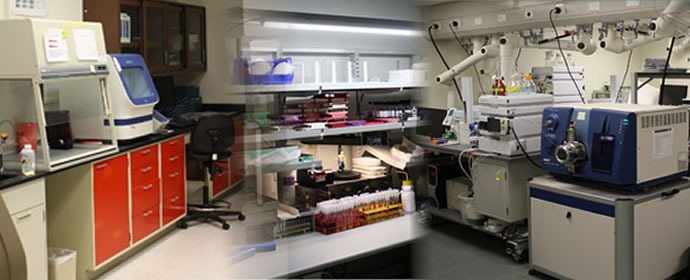
The Denver Human and Animal Food Laboratory (DENLHAF) is a multi-disciplinary lab performing domestic and import regulatory sample analyses in the Human and Animal Food Program (HAF). Staff working in the lab also conduct method development and research focusing on veterinary residue methods. DENLHAF is accredited to the ISO/IEC 17025 standard and is functionally organized into two regulatory branches: Microbiology and Chemistry.
Microbiology Branch
As the originator of the “high throughput” or “high efficiency” microbiological lab model, DENLHAF has taken the lead in human and animal food testing. The lab efficiently conducts numerous microbiological analyses on a wide range of consumer products. Typical analyses performed include microbial identification and quantification of pathogens in domestic and imported foods, cosmetics, and dietary supplements; testing of alkaline phosphatase in dairy products; measuring low-acid canned food pH and water activity; analyzing the integrity of food containers; and virology testing. DENLHAF is one of few laboratories that conduct testing to identify contaminants in dietary supplements. Additional testing performed includes, but is not limited to, antibiotic resistance testing, microbial limit testing, and WGS (whole genome sequencing) for bacterial characterization and outbreak source identification.
Chemistry Branch
The Chemistry Branch’s General Chemistry and Veterinary Chemistry groups analyze a wide range of food and feed samples for many different chemical residues, adulterants/ingredients, permitted and non-permitted colors, and food additives. Typical chemistry work includes the determination of residues and additives in imported and domestic food, as well as antibiotics in various food products such as milk and school lunches, illegal drug residues in animal tissues, medicated feed analysis, and testing of dietary supplements for unlawful ingredients such as 7-Hydroxymitragynine (7-OH). The lab also identifies and determines veterinary drug residues in fish, game meat, and milk samples from farming operations worldwide.
The DENLHAF chemistry lab has garnered national recognition for its emergency response to the Deepwater Horizon oil spill, the development of methods to analyze pet treats for illegal antibiotics and antivirals, and the development of comprehensive methods to detect natural and artificial color components in foods and cosmetics.
Specialized Resources and Capabilities
- Mass Spectrometric Analytical Suite
- Advanced Chemical Instrumentation Suite
- BSL 2+/3 Suite
- Broad-spectrum artificial and natural colorant determination
- Antibiotic Resistance Testing
- Whole genome sequencing of pathogenic organisms
- Food Container Integrity Analysis
- Highly Pathogenic Avian Influenza
- Veterinary drug residue testing and associated method development
New DENLHAF Laboratory to Open in 2029
Construction has begun for a new DENLHAF laboratory that will help the FDA continue to ensure the safety of the nation’s food supply. Once complete, the new laboratory will expand FDA’s capability to manage foodborne illness outbreaks and ensure product safety for food and cosmetics. The new laboratory will also significantly enhance DENLHAF’s emergency response capabilities and expand the range of microbiological analyses it is able to conduct.
This new laboratory represents a significant modernization of the facility, which was originally built as a munitions facility in 1941. Construction of the new state-of-the-art laboratory is expected to be completed by the end of 2028 with move-in expected for the first quarter of 2029. The existing laboratory will remain fully operational throughout construction, ensuring no disruption to the FDA’s food safety mission.