2023 FDA Science Forum
Retail Surveillance: Preventing Foodborne Illness Risk Factors in Restaurants
- Authors:
- Center:
-
Contributing OfficeCenter for Food Safety and Applied Nutrition
Abstract
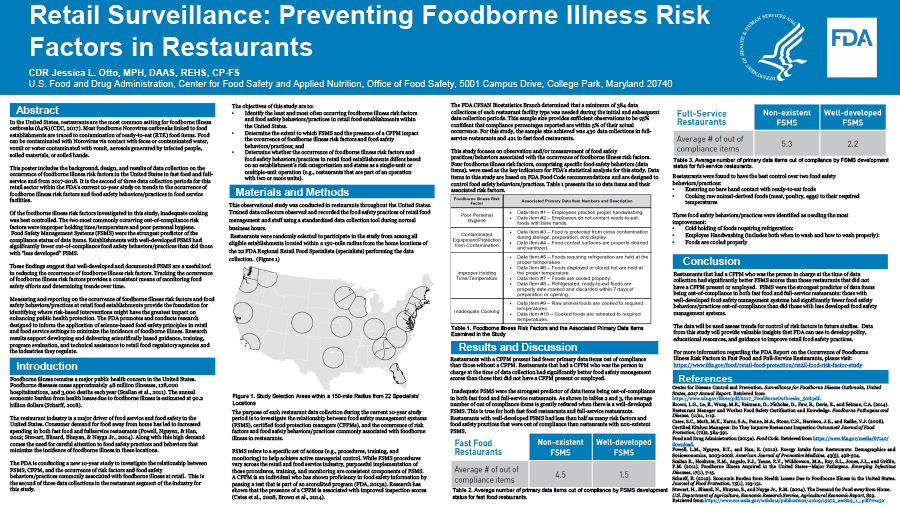
In the United States, restaurants are the most common setting for foodborne illness outbreaks (64%) (CDC, 2017). Most foodborne Norovirus outbreaks linked to food establishments are traced to contamination of ready-to-eat (RTE) food items. Food can be contaminated with Norovirus via contact with feces or contaminated water, vomit or water contaminated with vomit, aerosols generated by infected people, soiled materials, or soiled hands.
This poster includes the background, design, and results of data collection on the occurrence of foodborne illness risk factors in the United States in fast food and full-service and from 2017-2018. It is the second of three data collection periods for this retail sector within the FDA’s current 10-year study on trends in the occurrence of foodborne illness risk factors and food safety behaviors/practices in food service facilities.
Of the foodborne illness risk factors investigated in this study, inadequate cooking was best controlled. The two most commonly occurring out-of-compliance risk factors were improper holding time/temperature and poor personal hygiene.
Food Safety Management Systems (FSMS) were the strongest predictor of the compliance status of data items. Establishments with well-developed FSMS had significantly fewer out-of-compliance food safety behaviors/practices than did those with “less developed” FSMS. These findings suggest that well-developed and documented FSMS are a useful tool in reducing the occurrence of foodborne illness risk factors.
Tracking the occurrence of foodborne illness risk factors provides a consistent means of monitoring food safety efforts and determining trends over time. Measuring and reporting on the occurrence of foodborne illness risk factors and food safety behaviors/practices at retail food establishments provide the foundation for identifying where risk-based interventions might have the greatest impact on enhancing public health protection. The FDA promotes and conducts research designed to inform the application of science-based food safety principles in retail and food service settings to minimize the incidence of foodborne illness. Research results support developing and delivering scientifically based guidance, training, program evaluation, and technical assistance to retail food regulatory agencies and the industries they regulate.