2023 FDA Science Forum
Protein immunogenicity: impact of aggregate morphology and innate immune response modulating impurities on local immune activation
- Authors:
- Center:
-
Contributing OfficeCenter for Drug Evaluation and Research
Abstract
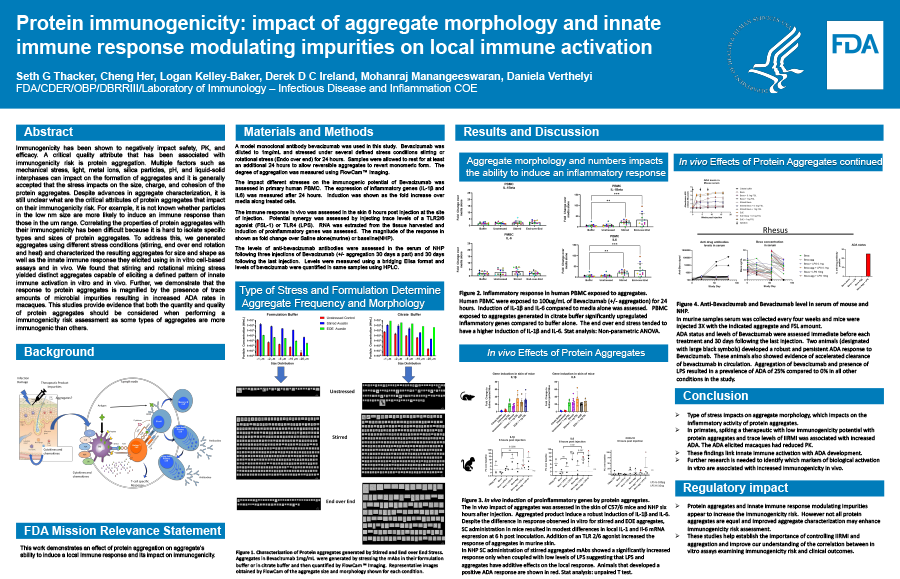
Immunogenicity has been shown to negatively impact safety, PK, and efficacy. A critical quality attribute that has been associated with immunogenicity risk is protein aggregation. Multiple factors such as mechanical stress, light, metal ions, silica particles, pH, and liquid-solid interphases can impact on the formation of aggregates and it is generally accepted that the stress impacts on the size, charge, and cohesion of the protein aggregates. Despite advances in aggregate characterization, it is still unclear what are the critical attributes of protein aggregates that impact on their immunogenicity risk. For example, it is not known whether particles in the low nm size are more likely to induce an immune response than those in the um range. Correlating the properties of protein aggregates with their immunogenicity has been difficult because it is hard to isolate specific types and sizes of protein aggregates. To address this, we generated aggregates using different stress conditions (stirring, end over end rotation and heat) and characterized the resulting aggregates for size and shape as well as the innate immune response they elicited using in in vitro cell-based assays and in vivo. We found that stirring and rotational mixing stress yielded distinct aggregates capable of eliciting a defined pattern of innate immune activation in vitro and in vivo. Further, we demonstrate that the response to protein aggregates is magnified by the presence of trace amounts of microbial impurities resulting in increased ADA rates in macaques. This studies provide evidence that both the quantity and quality of protein aggregates should be considered when performing a immunogenicity risk assessment as some types of aggregates are more immunogenic than others.