2023 FDA Science Forum
Preventing Foodborne Illness Risk Factors in Schools
- Authors:
- Center:
-
Contributing OfficeCenter for Food Safety and Applied Nutrition
Abstract
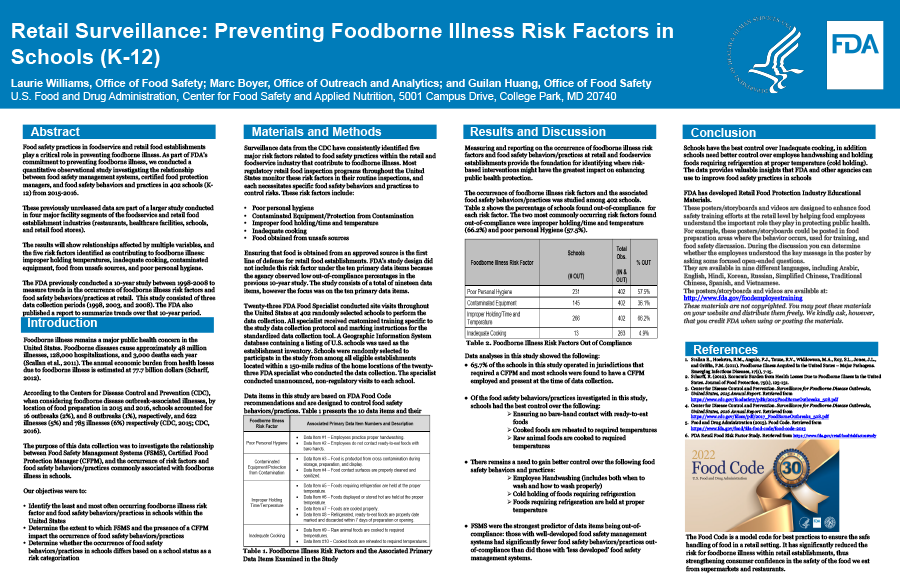
Food safety practices in foodservice and retail food establishments play a critical role in preventing foodborne illness. As part of FDA’s commitment to preventing foodborne illness, we conducted a quantitative observational study investigating the relationship between food safety management systems, certified food protection managers, and food safety behaviors and practices in 402 schools (K-12) from 2015-2016. Twenty-three FDA Food Specialist conducted site visits throughout the United States at randomly selected schools to perform the data collection. All specialist received customized training specific to the study data collection protocol and marking instructions for the standardized data collection tool. A Geographic Information System database containing a listing of U.S. schools was used as the establishment inventory. Schools were randomly selected to participate in the study from among all eligible establishments located within a 150-mile radius of the home locations of the twenty-three FDA specialist who conducted the data collection. The specialist conducted unannounced, non-regulatory visits to each school.
These previously unreleased data are part of a larger study conducted in four major facility segments of the foodservice and retail food establishment industries (restaurants, healthcare facilities, schools, and retail food stores). The results will show relationships affected by multiple variables, and the five risk factors identified as contributing to foodborne illness: improper holding temperatures, inadequate cooking, contaminated equipment, food from unsafe sources, and poor personal hygiene. Similar to findings in data analyzed for other facility segments: schools have the best control over No bare-hand contact with ready-to eat foods, in addition schools need better control over employee handwashing and holding foods requiring refrigeration at proper temperature (cold holding). The data provides valuable insights that FDA and other agencies can use to improve food safety practices in schools.