2021 FDA Science Forum
Perturbation of Immune and Intestinal Permeability Pathways, and Microbiome Shift: Differential Effects of Corn Oil on Different Rodent Models
- Authors:
- Center:
-
Contributing OfficeNational Center for Toxicological Research
Abstract
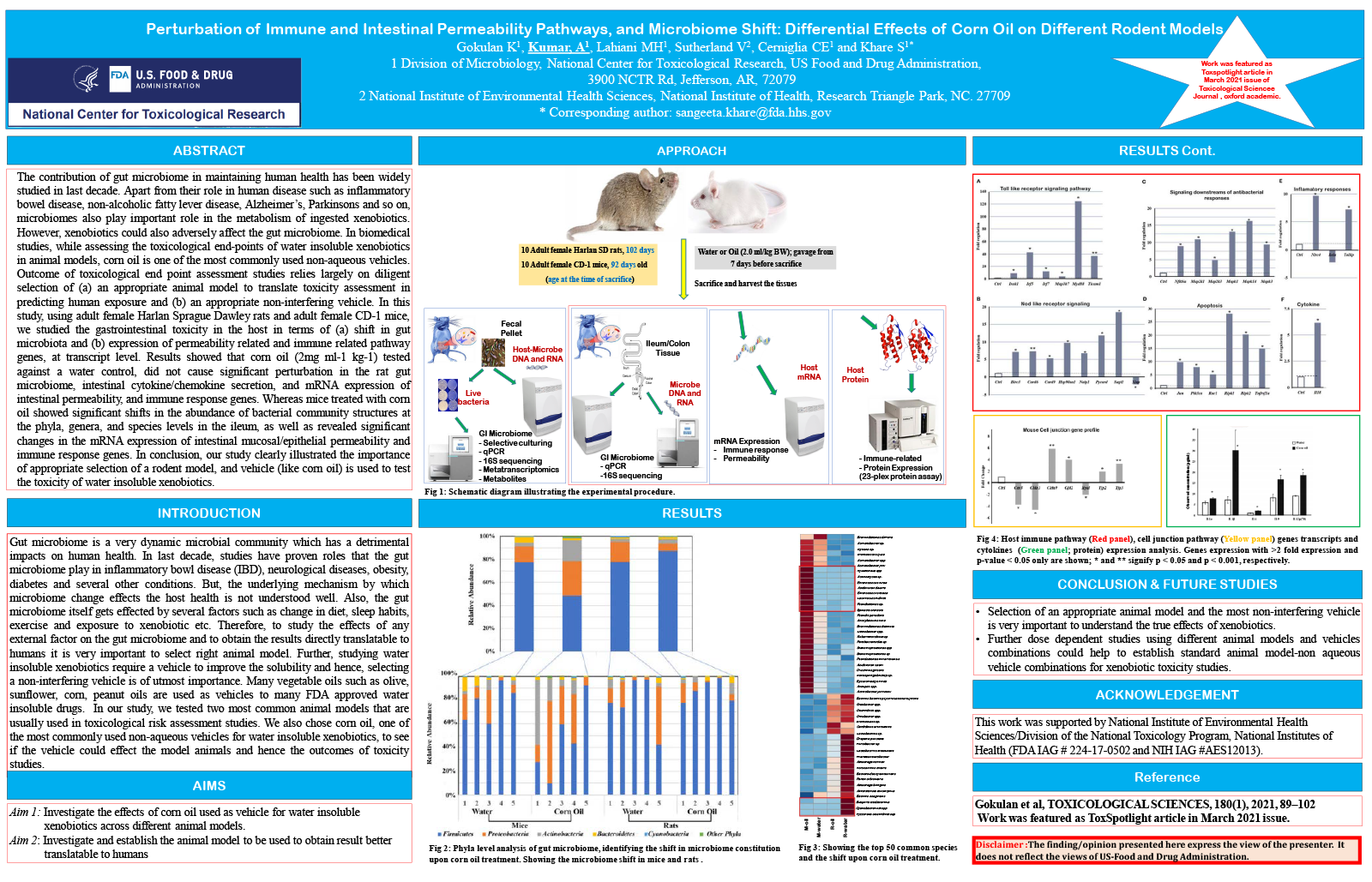
The contribution of gut microbiome in maintaining human health has been widely studied in last decade. Apart from their role in human disease such as inflammatory bowel disease, non-alcoholic fatty lever disease, Alzheimer’s, Parkinsons and so on, microbiomes also play important role in the metabolism of ingested xenobiotics. However, xenobiotics could also adversely affect the gut microbiome. In biomedical studies, while assessing the toxicological end-points of water insoluble xenobiotics in animal models, corn oil is one of the most commonly used non-aqueous vehicles. Outcome of toxicological end point assessment studies relies largely on diligent selection of (a) an appropriate animal model to translate toxicity assessment in predicting human exposure and (b) an appropriate non-interfering vehicle. In this study, using adult female Harlan Sprague Dawley rats and adult female CD-1 mice, we studied the gastrointestinal toxicity in the host in terms of (a) shift in gut microbiota and (b) expression of permeability related and immune related pathway genes, at transcript level. Results showed that corn oil (2mg ml-1 kg-1) tested against a water control, did not cause significant perturbation in the rat gut microbiome, intestinal cytokine/chemokine secretion, and mRNA expression of intestinal permeability, and immune response genes. Whereas, mice treated with corn oil showed significant shifts in the abundance of bacterial community structures at the phyla, genera, and species levels in the ileum, as well as revealed significant changes in the mRNA expression of membrane permeability and immune response genes. In conclusion, our study clearly illustrated the importance of appropriate selection of a rodent model, and vehicle (like corn oil) is used to test the toxicity of water insoluble xenobiotics.