2021 FDA Science Forum
Patient-Reported Outcomes in Commercial Pediatric Oncology Clinical Trials
- Authors:
- Center:
-
Contributing OfficeCenter for Drug Evaluation and Research
Abstract
BACKGROUND AND PURPOSE:
Pediatric patient-reported outcome (PRO) data can complement existing safety and efficacy data by quantifying symptom and functional outcomes from the patient’s perspective. This is important because previous research indicates that clinicians and caregivers frequently under or overestimate the prevalence, intensity, and burden of symptomatic adverse events, when compared to children’s self-report. Pediatric PRO data can thereby help inform FDA’s benefit-risk assessment of cancer therapeutics for children.
OBJECTIVES:
This study assessed use of PROs in commercial pediatric oncology clinical trials submitted to FDA for regulatory review.
METHODS:
FDA databases were searched to identify pediatric oncology product applications approved between November 1997 and April 2020. Sponsor-submitted documents were reviewed to determine whether PRO data were collected, which instruments were used, and the quality of collected data (sample size, attrition, completion rates, use of fit-for-purpose instruments, and thresholds for clinically meaningful within-patient change). The role of PROs in each trial (endpoint hierarchy) was also recorded, along with whether PRO results were included in product labeling.
RESULTS:
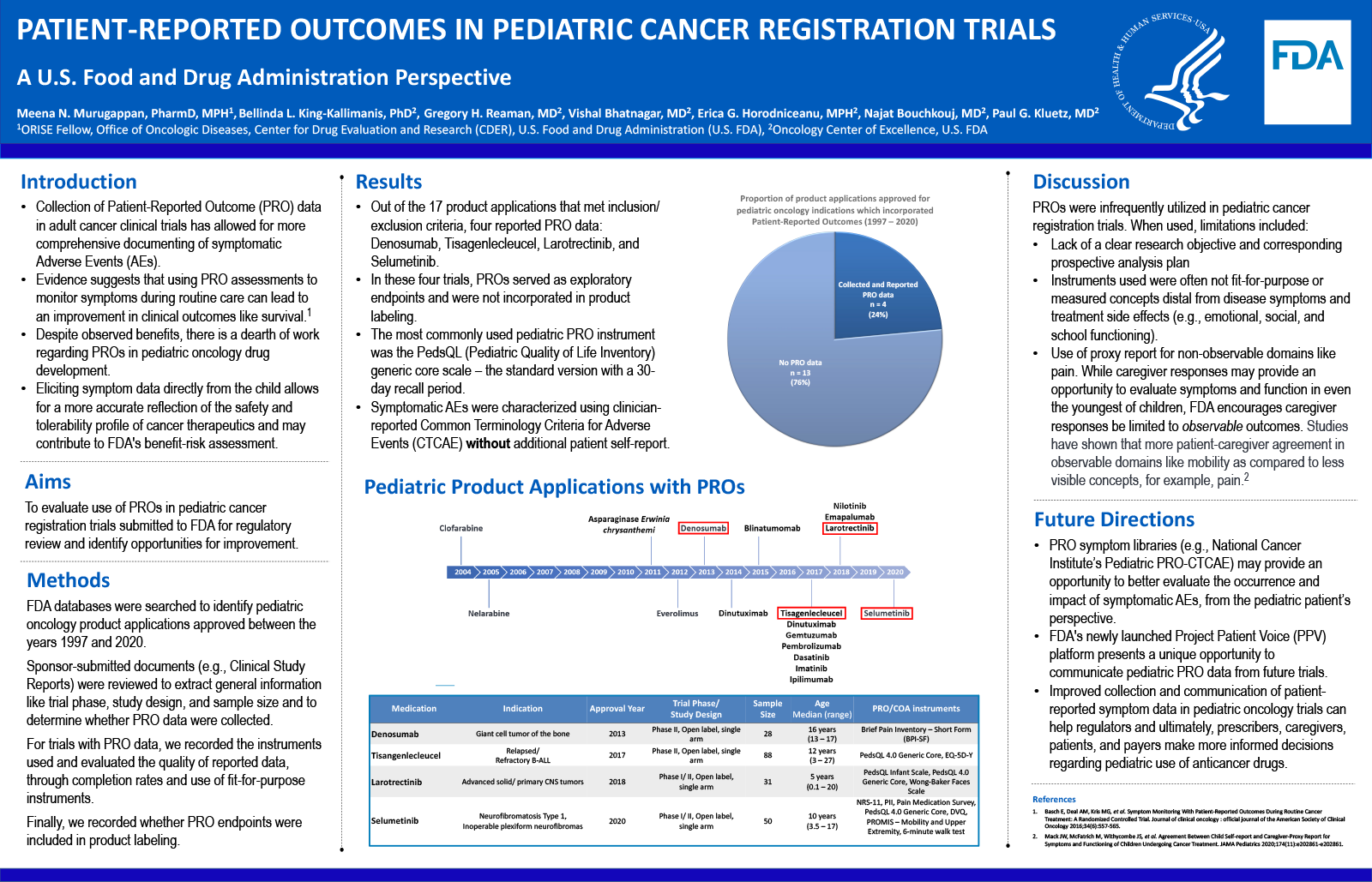
Seventeen pediatric oncology applications were reviewed, and 4 included PRO data: Denosumab, Tisagenlecleucel, Larotrectinib, and Selumetinib. In these 4 instances, PROs were exploratory endpoints and were not incorporated in product labeling. The Pediatric Quality of Life Inventory TM (PedsQL) Generic Core Scale was the most widely used instrument. Trials collecting PRO data were single-arm studies with sample sizes ranging from 28 to 88 patients. Only 1 of the 4 trials reported PRO assessment completion rates. Symptomatic Adverse Events (AEs) were predominately characterized using clinician-reported Common Terminology Criteria for Adverse Events (CTCAE) without additional patient-report.
CONCLUSION:
PROs were infrequently utilized in pediatric cancer registration trials. When used, PRO data were limited by lack of a clear research objective and corresponding prospective statistical analysis plan. High levels of missing data and use of PRO instruments that were not fit-for-purpose were also noted. Contemporary PRO symptom libraries such as the National Cancer Institute’s Pediatric PRO-CTCAE may provide an opportunity to better evaluate the occurrence and impact of symptomatic AEs and complement standard clinician-reported safety data in pediatric oncology trials.