2021 FDA Science Forum
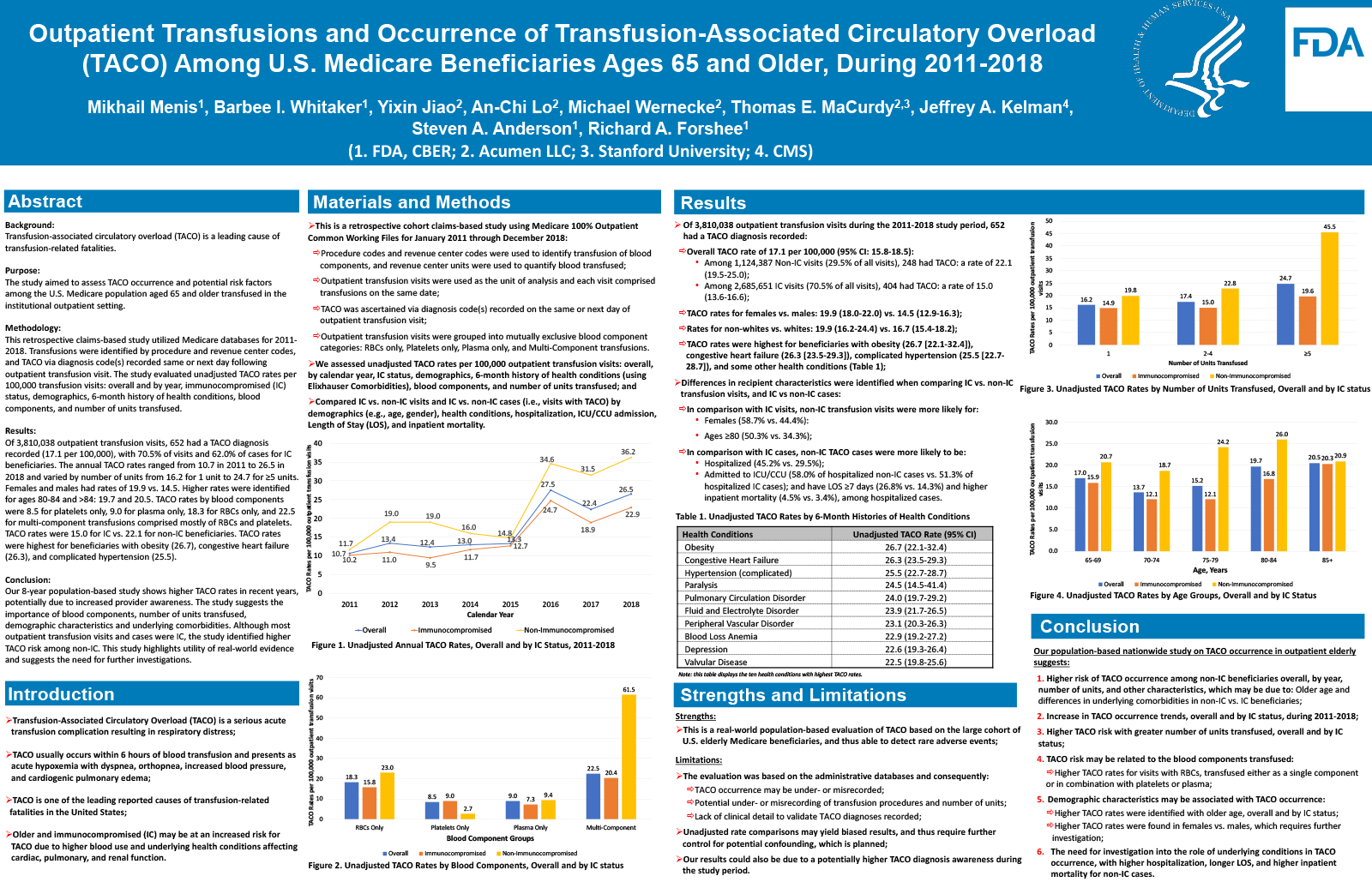
Outpatient Transfusions and Occurrence of Transfusion-Associated Circulatory Overload (TACO) Among U.S. Medicare Beneficiaries Ages 65 and Older, During 2011-2018
- Authors:
- Center:
-
Contributing OfficeCenter for Biologics Evaluation and Research
Abstract
Background:
Transfusion-associated circulatory overload (TACO) is a leading cause of transfusion-related fatalities.
Purpose:
The study aimed to assess TACO occurrence and potential risk factors among the U.S. Medicare population aged 65 and older transfused in the institutional outpatient setting.
Methodology:
This retrospective claims-based study utilized Medicare databases for 2011-2018. Transfusions were identified by procedure and revenue center codes, and TACO via diagnosis code(s) recorded same or next day following outpatient transfusion visit. The study evaluated unadjusted TACO rates per 100,000 transfusion visits: overall and by year, immunocompromised (IC) status, demographics, 6-month history of health conditions, blood components, and number of units transfused.
Results:
Of 3,810,038 outpatient transfusion visits, 652 had a TACO diagnosis recorded (17.1 per 100,000), with 70.5% of visits and 62.0% of cases for IC beneficiaries. The annual TACO rates ranged from 10.7 in 2011 to 26.5 in 2018 and varied by number of units from 16.2 for 1 unit to 24.7 for ≥5 units. Females and males had rates of 19.9 vs. 14.5. Higher rates were identified for ages 80-84 and >84: 19.7 and 20.5. TACO rates by blood components were 8.5 for platelets only, 9.0 for plasma only, 18.3 for RBCs only, and 22.5 for multi-component transfusions comprised mostly of RBCs and platelets. TACO rates were 15.0 for IC vs. 22.1 for non-IC beneficiaries. TACO rates were highest for beneficiaries with obesity (26.7), congestive heart failure (26.3), and complicated hypertension (25.5).
Conclusion:
Our 8-year population-based study shows higher TACO rates in recent years, potentially due to increased provider awareness. The study suggests the importance of blood components, number of units transfused, demographic characteristics and underlying comorbidities. Although most outpatient transfusion visits and cases were IC, the study identified higher TACO risk among non-IC. This study highlights utility of real-world evidence and suggests the need for further investigations.