2021 FDA Science Forum
Norovirus WGS Applied to Outbreak Tracking and Surveillance Efforts in Orange County, CA
- Authors:
- Center:
-
Contributing OfficeCenter for Food Safety and Applied Nutrition
Abstract
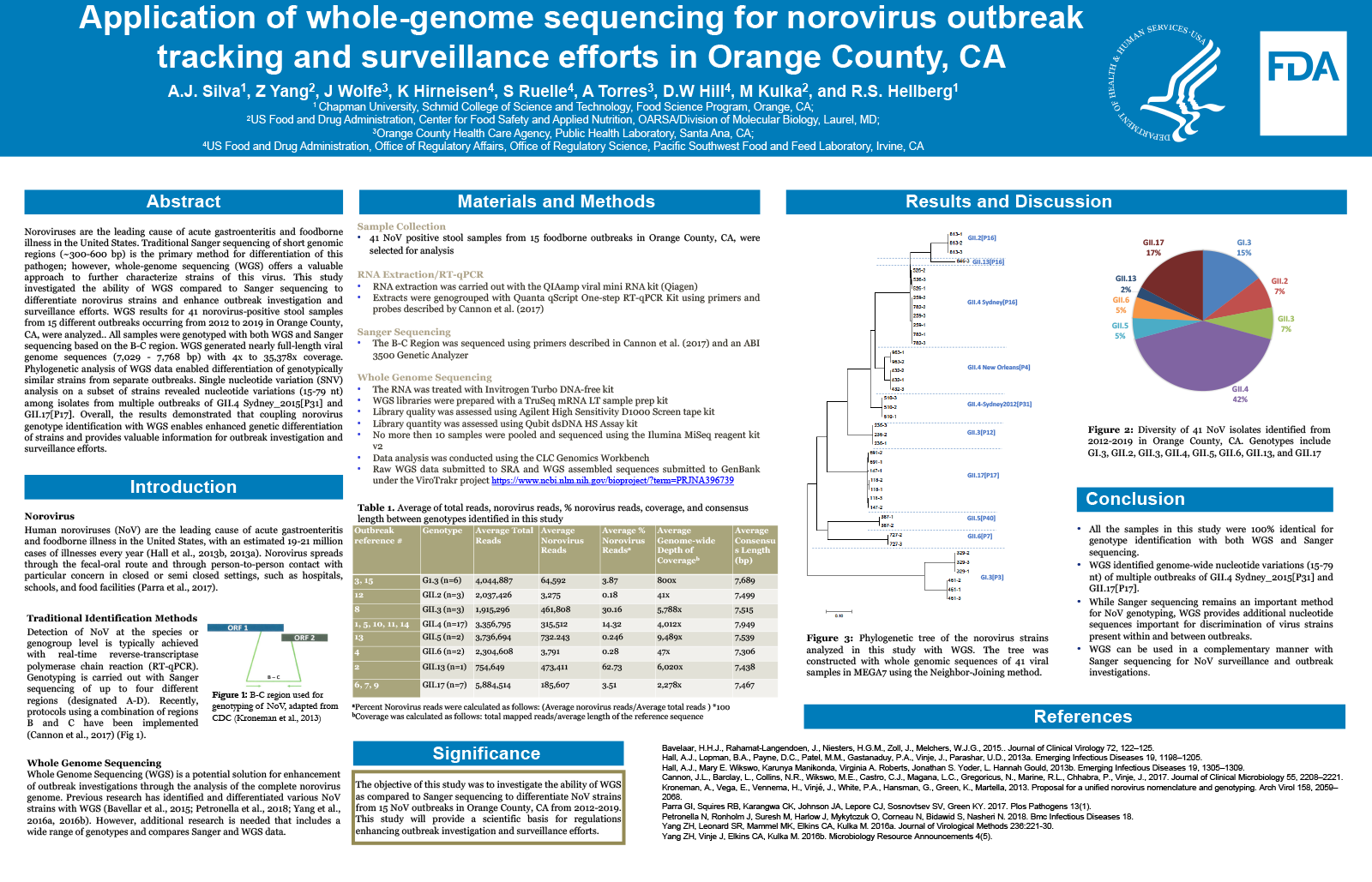
Noroviruses are the leading cause of acute gastroenteritis and foodborne illness in the United States. Traditional Sanger sequencing of short genomic regions (~300-600 bp) is the primary method for differentiation of this pathogen; however, whole-genome sequencing (WGS) offers a valuable approach to further characterize strains of this virus. This study investigated the ability of WGS compared to Sanger sequencing to differentiate norovirus strains and enhance outbreak investigation and surveillance efforts. WGS results for 41 norovirus-positive stool samples from 15 different outbreaks occurring from 2012 to 2019 in Orange County, CA, were analyzed.. All samples were genotyped with both WGS and Sanger sequencing based on the B-C region. WGS generated nearly full-length viral genome sequences (7,029 - 7,768 bp) with 4x to 35,378x coverage. Phylogenetic analysis of WGS data enabled differentiation of genotypically similar strains from separate outbreaks. Single nucleotide variation (SNV) analysis on a subset of strains revealed nucleotide variations (15-79 nt) among isolates from multiple outbreaks of GII.4 Sydney_2015[P31] and GII.17[P17]. Overall, the results demonstrated that coupling norovirus genotype identification with WGS enables enhanced genetic differentiation of strains and provides valuable information for outbreak investigation and surveillance efforts.