2021 FDA Science Forum
Integrated Non-animal Testing Methods for Skin Sensitization Characterization of Chemicals
- Authors:
- Center:
-
Contributing OfficeCenter for Food Safety and Applied Nutrition
Abstract
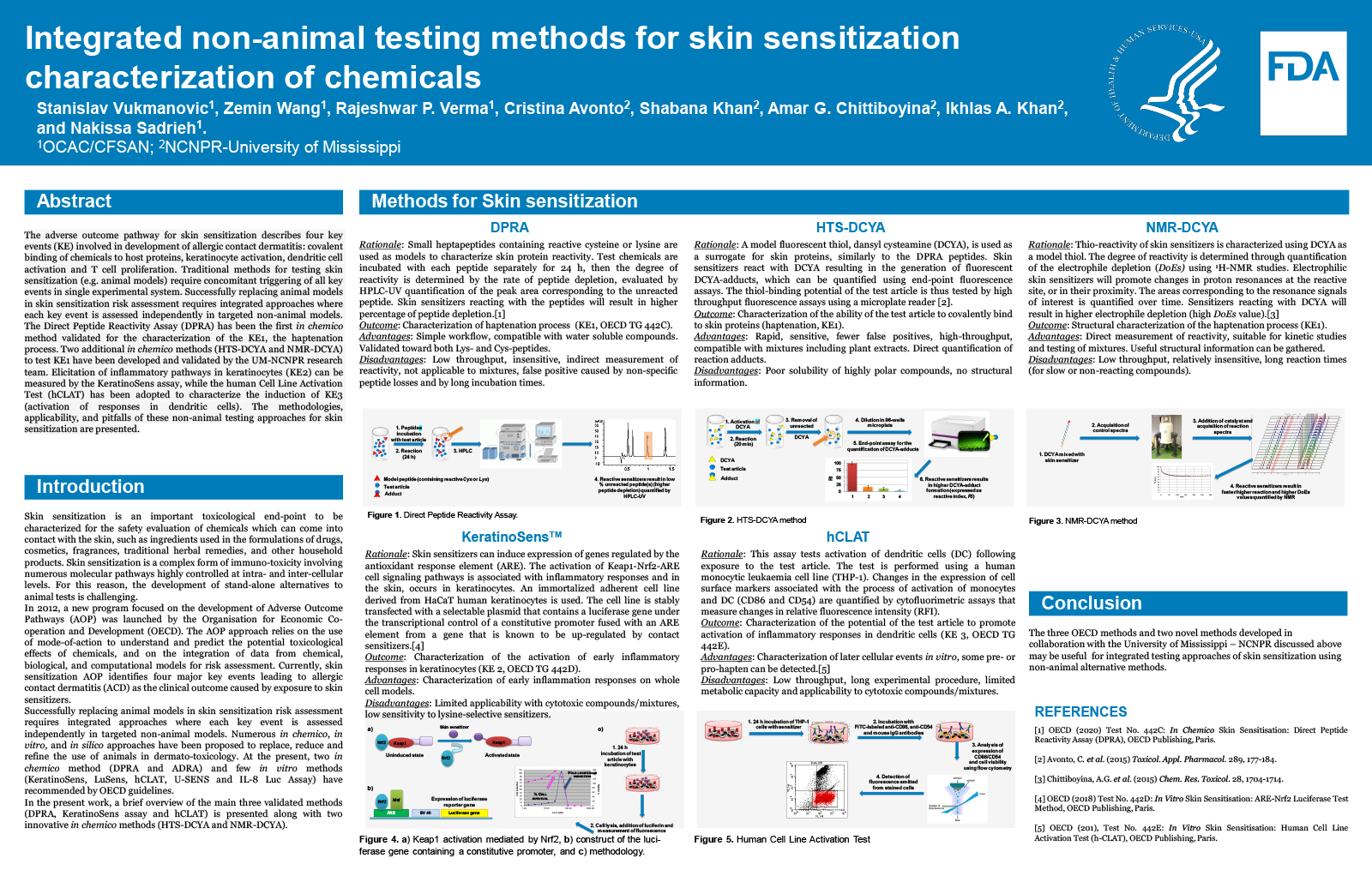
The adverse outcome pathway for skin sensitization describes four key events (KE) involved in development of allergic contact dermatitis., Traditional methods for testing skin sensitization (e.g. animal models) require concomitant triggering of all key events in single experimental system. Successfully replacing animal models in skin sensitization risk assessment requires integrated approaches where each key event is assessed independently in targeted non-animal models. The Direct Peptide Reactivity Assay (DPRA) has been the first in chemico method validated for the characterization of the KE1, the haptenation process. Two additional in chemico methods (HTS-DCYA and NMR-DCYA) to test KE1 have been developed and validated by the UM-NCNPR research team. Elicitation of inflammatory pathways in keratinocytes (KE2) can be measured by the KeratinoSens assay, while the human Cell Line Activation Test (hCLAT) has been adopted to characterize the induction of KE3 (activation of responses in dendritic cells). The methodologies, applicability, and pitfalls of these non-animal testing approaches for skin sensitization will be presented.