2021 FDA Science Forum
Immune Checkpoint Receptor LILRB4 is Required for NK Cell-Mediated Protection from Virus Infection
- Authors:
- Center:
-
Contributing OfficeCenter for Drug Evaluation and Research
Abstract
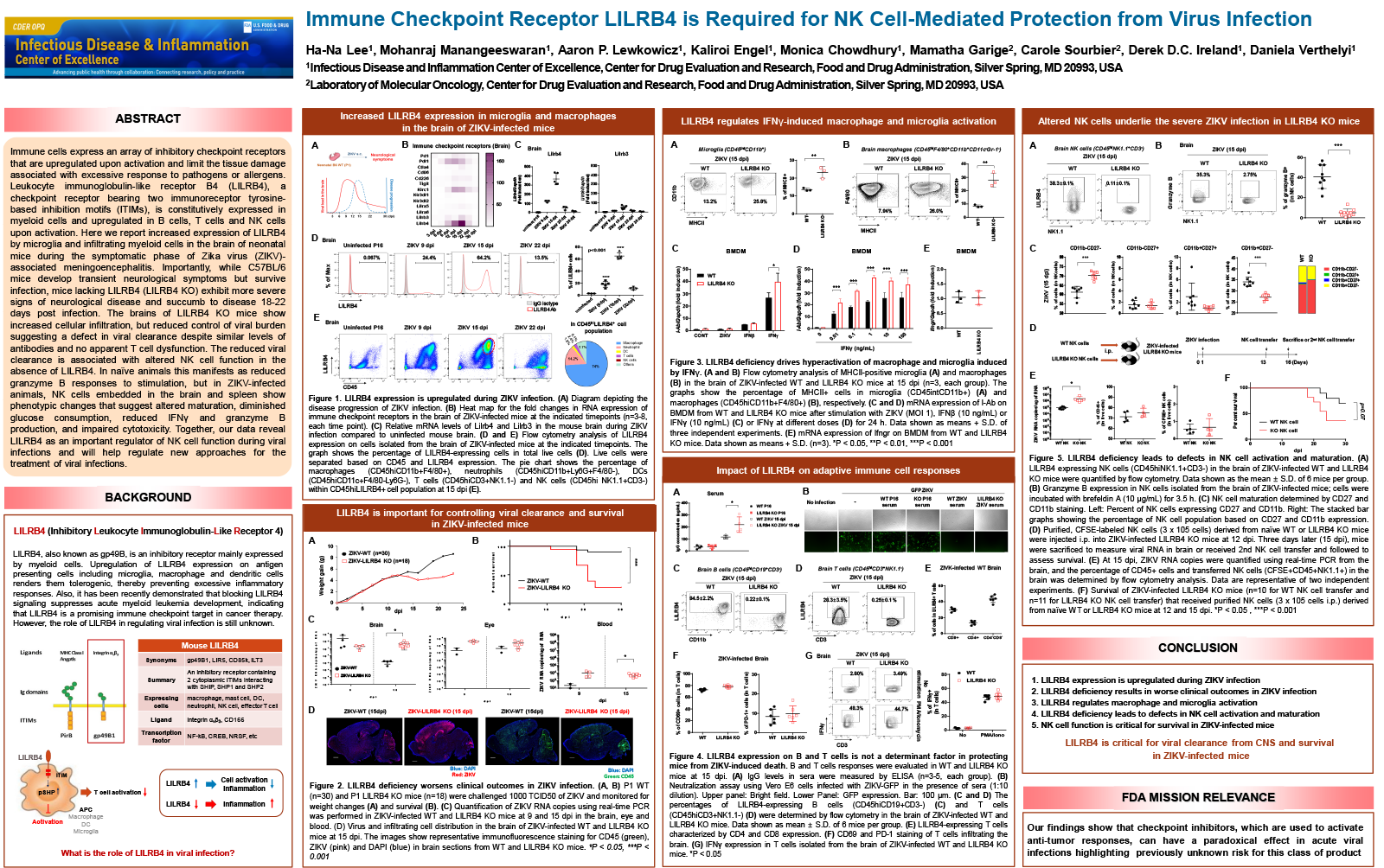
Immune cells express an array of inhibitory checkpoint receptors that are upregulated upon activation and limit the tissue damage associated with excessive response to pathogens or allergens. Leukocyte immunoglobulin-like receptor B4 (LILRB4), a checkpoint receptor bearing two immunoreceptor tyrosine-based inhibition motifs (ITIMs), is constitutively expressed in myeloid cells and upregulated in B cells, T cells and NK cells upon activation. Here we report increased expression of LILRB4 by microglia and infiltrating myeloid cells in the brain of neonatal mice during the symptomatic phase of Zika virus (ZIKV)-associated meningoencephalitis. Importantly, while C57BL/6 mice develop transient neurological symptoms but survive infection, mice lacking LILRB4 (LILRB4 KO) exhibit more severe signs of neurological disease and succumb to disease 18-22 days post infection. The brains of LILRB4 KO mice show increased cellular infiltration, but reduced control of viral burden suggesting a defect in viral clearance despite similar levels of antibodies and no apparent T cell dysfunction. The reduced viral clearance is associated with altered NK cell function in the absence of LILRB4. In naïve animals this manifests as reduced granzyme B responses to stimulation, but in ZIKV-infected animals, NK cells embedded in the brain and spleen show phenotypic changes that suggest altered maturation, diminished glucose consumption, reduced IFNγ and granzyme B production, and impaired cytotoxicity. Together, our data reveal LILRB4 as an important regulator of NK cell function during viral infections and will help regulate new approaches for the treatment of viral infections.