2023 FDA Science Forum
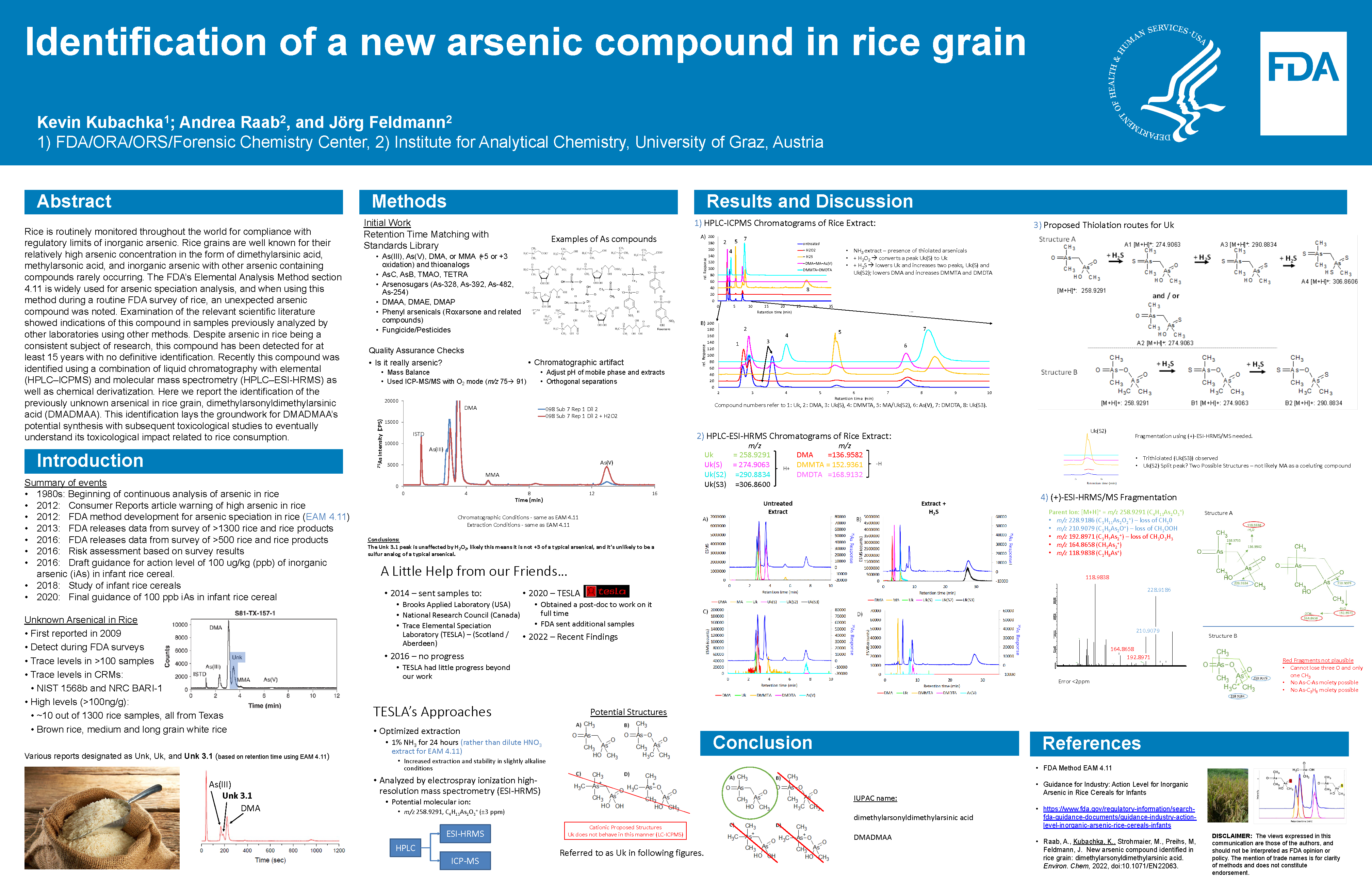
Identification of a new arsenic compound in in rice grain
- Authors:
- Center:
-
Contributing OfficeOffice of Regulatory Affairs
Abstract
Rice is routinely monitored throughout the world for compliance with regulatory limits of inorganic arsenic. Rice grains are well known for their relatively high arsenic concentration in the form of dimethylarsinic acid, methylarsonic acid, and inorganic arsenic with other arsenic containing compounds rarely occurring. The FDA’s Elemental Analysis Method section 4.11 is widely used for arsenic speciation analysis, and when using this method during a routine FDA survey of rice, an unexpected arsenic compound was noted. Examination of the relevant scientific literature showed indications of this compound in samples previously analyzed by other laboratories using other methods. Despite arsenic in rice being a consistent subject of research, this compound has been around for at least 15 years with no definitive identification. Recently this compound was identified using a combination of liquid chromatography with elemental (HPLC–ICPMS) and molecular mass spectrometry (HPLC–ESMS) as well as chemical derivatization. Here we report the identification of the previously unknown arsenical in rice grain, dimethylarsonyldimethylarsinic acid (DMADMAA). This identification lays the groundwork for DMADMAA’s potential synthesis with subsequent toxicological studies to eventually understand its toxicological impact related to rice consumption.