2021 FDA Science Forum
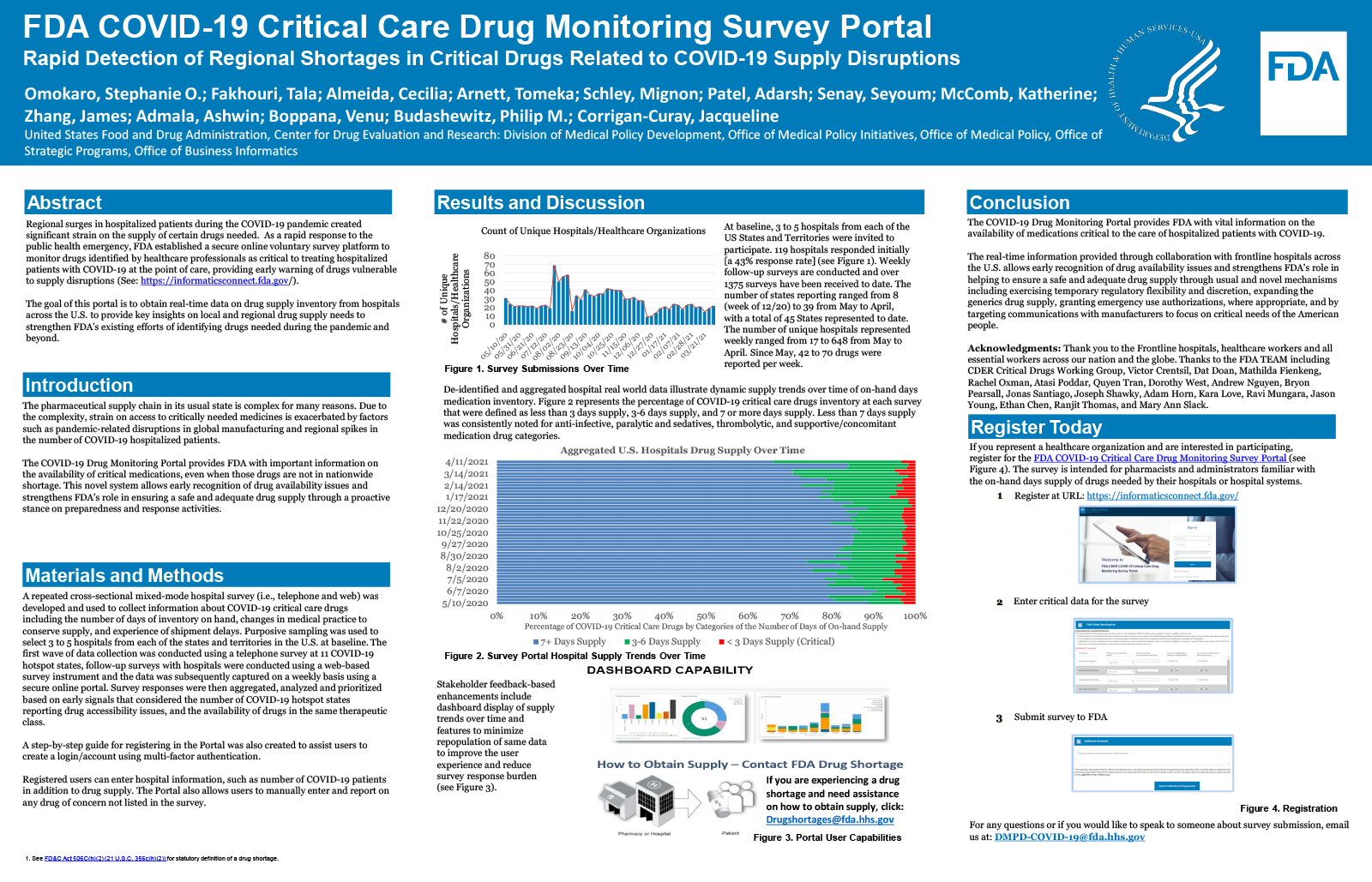
The Food and Drug Administration (FDA) COVID-19 Critical Care Drug Monitoring Survey Portal: Rapid Detection of Regional Shortages in Critical Drugs Related to COVID-19 Supply Disruptions
- Authors:
- Center:
-
Contributing OfficeOffice of the Commissioner
Abstract
Background
At the onset of the COVID-19 pandemic in the US, regional surges in hospitalized patients created significant strain on the supply of certain drugs needed for treatment of hospitalized COVID-19 patients.
Purpose
As a rapid response to the public health emergency, FDA established a survey platform to monitor critical care drugs at the point of care, providing early signals of drugs at risk of shortage.
Methodology
A mixed methods approach was used to design the system. First, interviews were conducted with key healthcare professionals from hospital systems in 11 states with high COVID-19 incidence to identify critical medications and to define key attributes for a real-time monitoring system of hospital inventories. Based on the findings from these interviews, a multimode survey was developed to collect voluntary real-world data about on-hand days-supply, changes in medical practice to conserve supply, and experiences of shipment delays. The first wave of data collection was conducted using a telephone survey and weekly follow-up surveys utilized a web instrument on a secure online portal (https://informaticsconnect.fda.gov/). Survey responses were aggregated and analyzed.
Results
At baseline, 3 to 5 hospitals from each of the US States and Territories were invited to participate. 119 hospitals responded initially with a 43% response rate. Weekly follow-up surveys were conducted and over 1000 surveys have been received to date. The number of states reporting ranged from 13 to 39 from May to December, with a total of 45 States represented to date. The number of unique hospitals represented weekly ranged from 35 to 648 from May to December. Since May, 38 to 60 drugs were reported per week. Low supply was consistently noted for anti-infective, paralytic, and thrombolytic drug categories.
Conclusion
The COVID-19 Drug Monitoring Portal provides FDA with vital information on the availability of critical medications, even when those drugs were not in nationwide shortage. This newly developed system allows early recognition of drug availability issues and augments the FDA’s role in ensuring a safe and adequate drug supply through regulatory flexibility, expanding the generics drug supply, and by targeting communications with manufacturers.