2023 FDA Science Forum
Effect of Processing Conditions on Microbial Viability and Survival in Fecal Microbiota Transplantation
- Authors:
- Center:
-
Contributing OfficeCenter for Biologics Evaluation and Research
Abstract
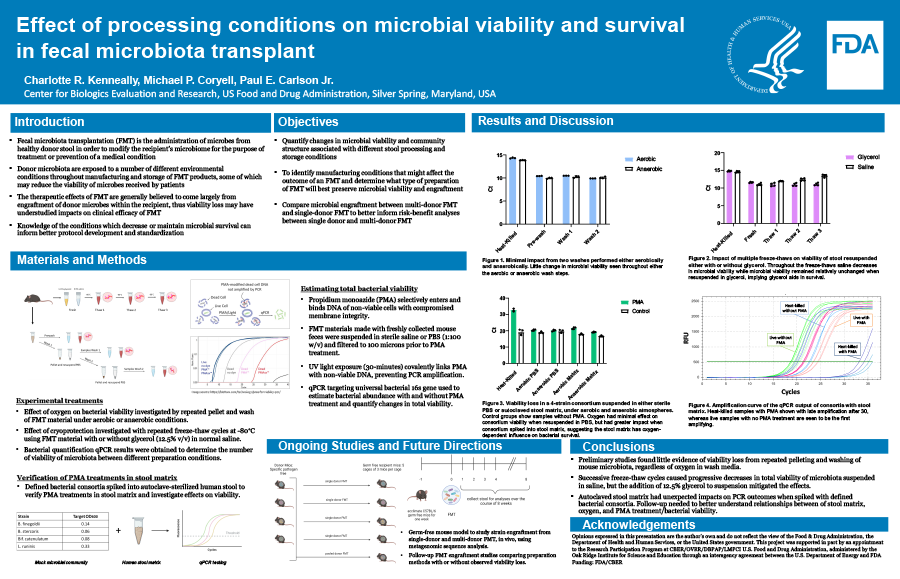
Fecal microbiota transplantation (FMT) is the administration of microbes from healthy donor stool in order to modify the recipient’s microbiome and treat or prevent a medical condition. Differences in the conditions and processes used to manufacture FMT products can expose the product microbiota to a variety of environmental stressors and potentially reduce the potency of the product. The therapeutic effects of FMT are thought to primarily result from engraftment of donor microbes in the recipient. Thus, viability loss may impact clinical efficacy of FMT.The purpose of this research project is to quantify changes in microbial viability and community structure associated with different stool processing and storage conditions. FMT slurries, made from freshly collected mouse stool or from defined mixtures of cultured bacterial strains, were suspended in PBS or normal saline to simulate FMT materials. Simulated FMT suspensions were exposed to different FMT processing and storage conditions, including centrifugation/wash cycles, freeze-thaws at -80C, and different levels of oxygen exposure. Bacterial load was assessed via qPCR, using universal primers targeting conserved regions of the bacterial 16s rRNA gene. Relative changes in viability were measured using a propidium monoazide (PMA)-based synthetic dye that selectively inhibits PCR amplification of DNA from dead cells with compromised membranes. This viability PCR protocol was previously optimized for working with diluted stool samples. The composition of viable communities was investigated using next generation sequencing of bacterial 16s rRNA gene amplicons. PCR results showed that stool samples frozen at -80°C had reduced viability compared to fresh, unfrozen samples. Repeated pelleting and washing of freshly collected fecal samples did not significantly reduce total viability compared to baseline. Preliminary analyses suggest that viability of fecal microbes can be influenced by the conditions under which it is processed and stored. Ongoing experiments include spiking known quantities of defined bacterial consortia into sterilized human fecal material to verify findings of PMA-based viability methods. Understanding the impact that manufacturing conditions have on microbial survival may help inform development of FMT manufacturing protocols to maximize survival of bacterial species in the products.