2023 FDA Science Forum
Developing a new immunocompetent mouse model for Dengue virus infection
- Authors:
- Center:
-
Contributing OfficeCenter for Drug Evaluation and Research
Abstract
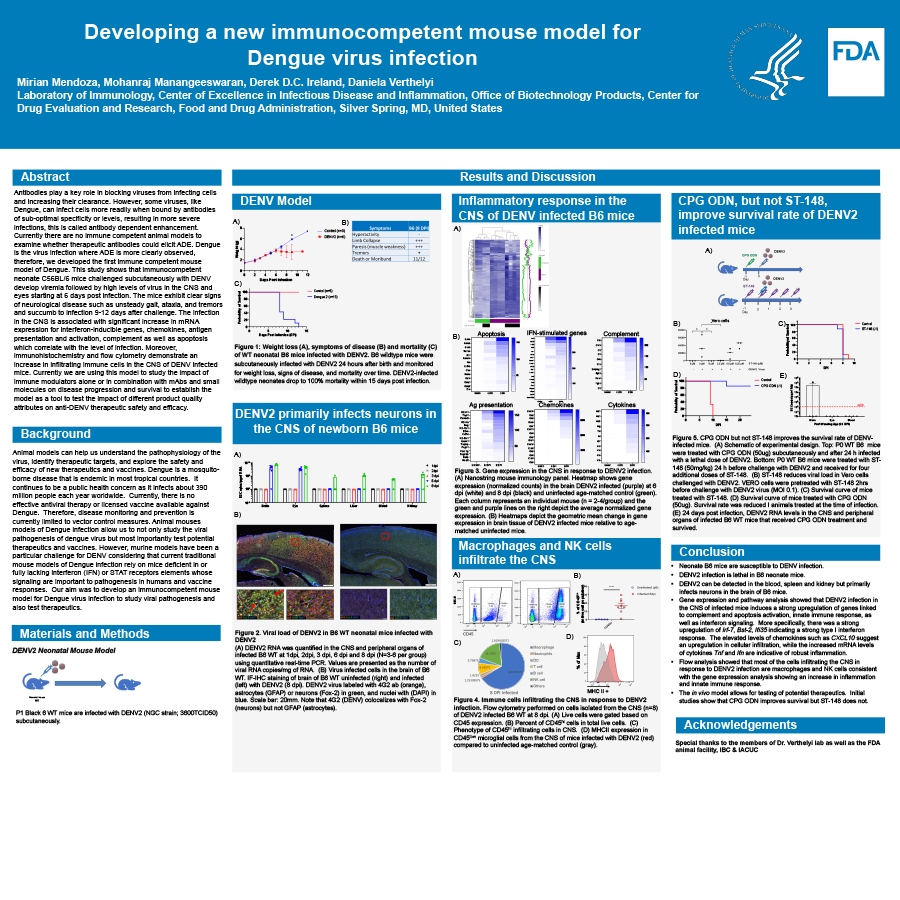
Antibodies play a key role in blocking viruses from infecting cells and increasing their clearance. However, some viruses, like Dengue, can infect cells more readily when bound by antibodies of sub-optimal specificity or levels, resulting in more severe infections, this is called antibody dependent enhancement. Currently there are no immune competent animal models to examine whether therapeutic antibodies could elicit ADE. Dengue is the virus infection where ADE is more clearly observed, therefore, we developed the first immune competent mouse model of Dengue. This study shows that immunocompetent neonate C56BL/6 mice challenged subcutaneously with DENV develop viremia followed by high levels of virus in the CNS and eyes starting at 6 days post infection. The mice exhibit clear signs of neurological disease such as unsteady gait, ataxia, and tremors and succumb to infection 9-12 days after challenge. The infection in the CNS is associated with significant increase in mRNA expression for interferon-inducible genes, chemokines, antigen presentation and activation, complement as well as apoptosis which correlate with the level of infection. Moreover, immunohistochemistry and flow cytometry demonstrate an increase in infiltrating immune cells in the CNS of DENV infected mice. Currently we are using this model to study the impact of immune modulators alone or in combination with mAbs and small molecules on disease progression and survival to establish the model as a tool to test the impact of different product quality attributes on anti-DENV therapeutic safety and efficacy.