2021 FDA Science Forum
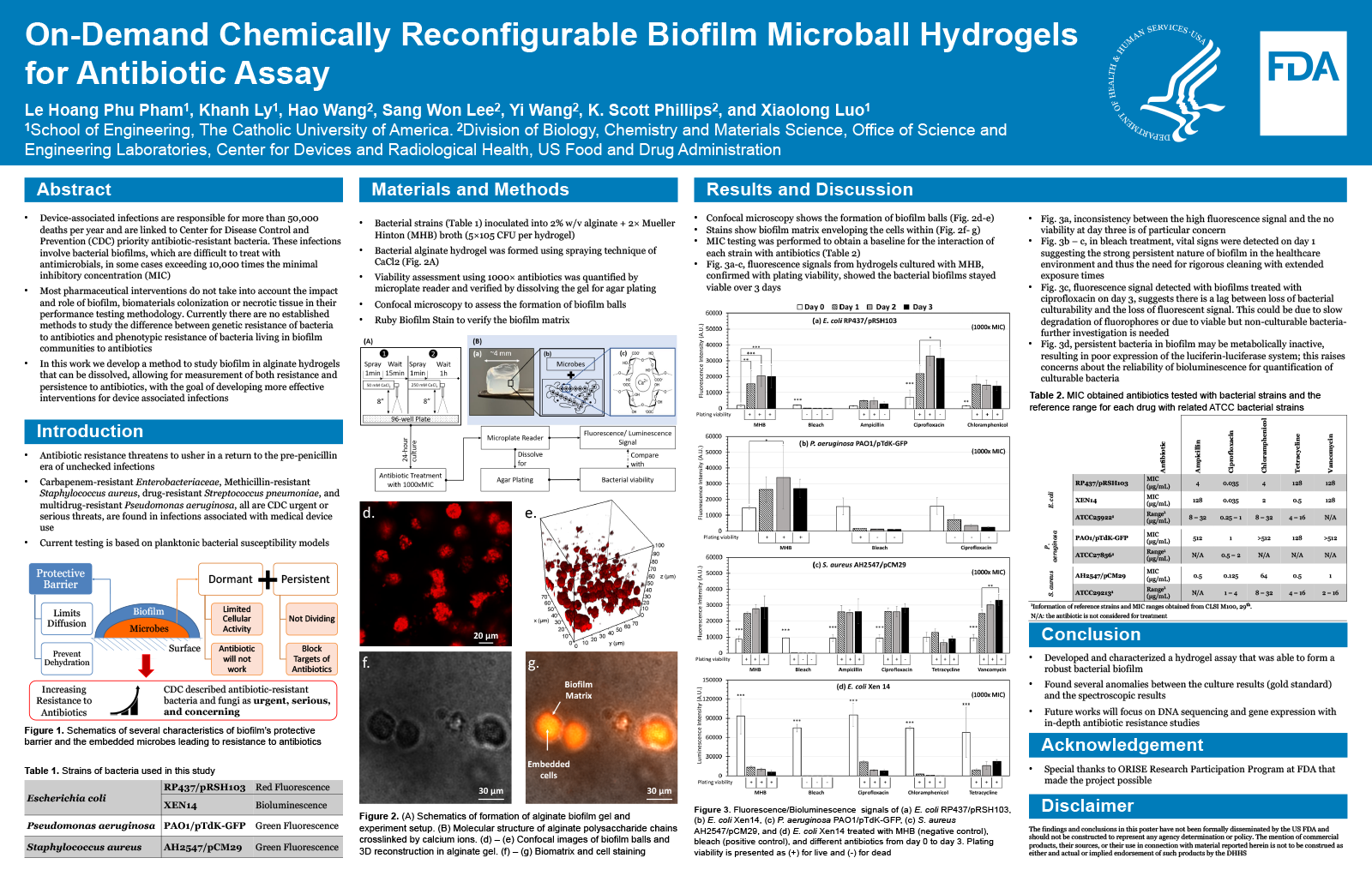
On-Demand Chemically Reconfigurable Biofilm Microball Hydrogels for Antibiotic Assay
- Authors:
- Center:
-
Contributing OfficeCenter for Devices and Radiological Health
Abstract
Biofilms are found in all major device-associated infections including catheter associated urinary tract, prosthetic joint, ventilator associated pneumonia, and endoscope associated infections, raising an urgent need to better understand how biofilm persistence contributes to infections and antibiotic resistance. In this work, we developed and characterized a novel hydrogel assay to measure biofilm persistence and antibiotic resistance simultaneously. The advantage of this assay is the ability to dissolve the media in which biofilm is formed and use it to quantify live cells by plating and culturing without having to perform an extraction step. This also allows for genotypic identification of resistance. Biofilms were formed within calcium alginate hydrogels in a high-throughput manner, and their persistence was analyzed by quantifying their fluorescence/bioluminescence with a microplate reader. Antibiotic resistance assay was performed by dissolving the alginate hydrogel for agar plating to examine bacterial viability. MIC determination of planktonic bacteria used in the study showed that all strains are susceptible to ciprofloxacin. E. coli Xen14 is susceptible to chloramphenicol and tetracycline. S. aureus AH2547 is susceptible to tetracycline and vancomycin. When we studied these bacteria in biofilms in the microplate hydrogel environment, we found that fluorescence was not a reliable indicator of the live/dead status of the microbes. After plating and culturing, we found that the microbes in hydrogel biofilm were significantly more persistent in the presence of all antibiotics tested. The poster will discuss specific findings and the implications for successfully treating biofilm-based infections in the clinic.