2021 FDA Science Forum
Comparison of In Vitro and In Vivo Insulin Bioidentity Assays to Monitor the Quality of Insulin Products
- Authors:
- Center:
-
Contributing OfficeCenter for Drug Evaluation and Research
Abstract
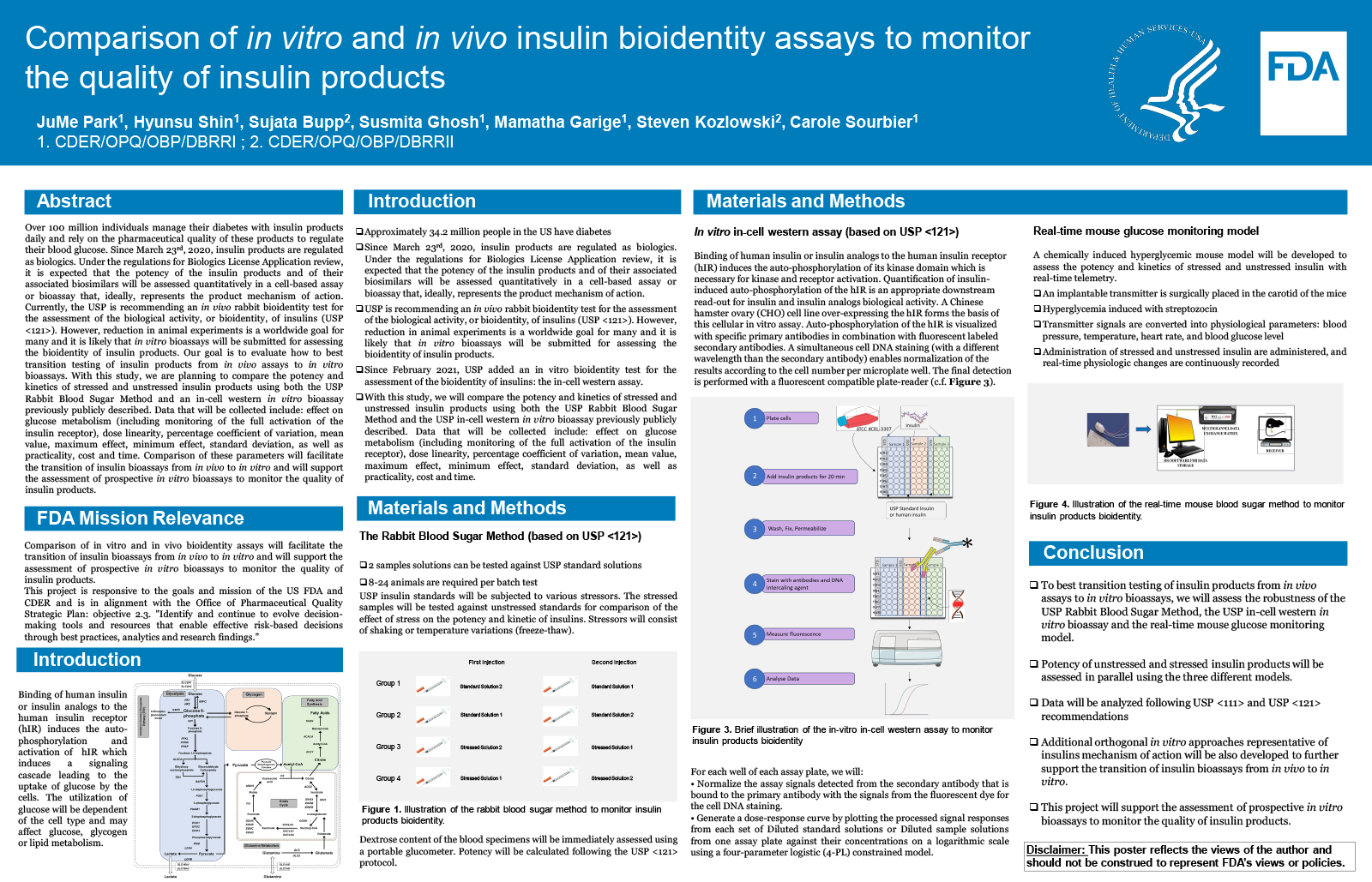
Over 100 million individuals manage their diabetes with insulin products daily and rely on the pharmaceutical quality of these products to regulate their blood glucose. Since March 23rd, 2020, insulin products are regulated as biologics. Under the regulations for Biologics License Application review, it is expected that the potency of the insulin products and of their associated biosimilars will be assessed quantitatively in a cell-based assay or bioassay that, ideally, represents the product mechanism of action. Currently, the USP is recommending an in vivo rabbit bioidentity test for the assessment of the biological activity, or bioidentity, of insulins (USP <121>). However, reduction in animal experiments is a worldwide goal for many and it is likely that in vitro bioassays will be submitted for assessing the bioidentity of insulin products. Our goal is to evaluate how to best transition testing of insulin products from in vivo assays to in vitro bioassays. With this study, we are planning to compare the potency and kinetics of stressed and unstressed insulin products using both the USP Rabbit Blood Sugar Method and an in-cell western in vitro bioassay previously publicly described. Data that will be collected include: effect on glucose metabolism (including monitoring of the full activation of the insulin receptor), dose linearity, percentage coefficient of variation, mean value, maximum effect, minimum effect, standard deviation, as well as practicality, cost and time. Comparison of these parameters will facilitate the transition of insulin bioassays from in vivo to in vitro and will support the assessment of prospective in vitro bioassays to monitor the quality of insulin products. This project is responsive to the goals and mission of the US FDA and CDER and is in alignment with the Office of Pharmaceutical Quality Strategic Plan: objective 2.3. "Identify and continue to evolve decision-making tools and resources that enable effective risk-based decisions through best practices, analytics and research findings.”