2023 FDA Science Forum
Comparative assessment of physiochemical and biological attributes of EGFR-targeting bispecific antibodies
- Authors:
- Center:
-
Contributing OfficeCenter for Drug Evaluation and Research
Abstract
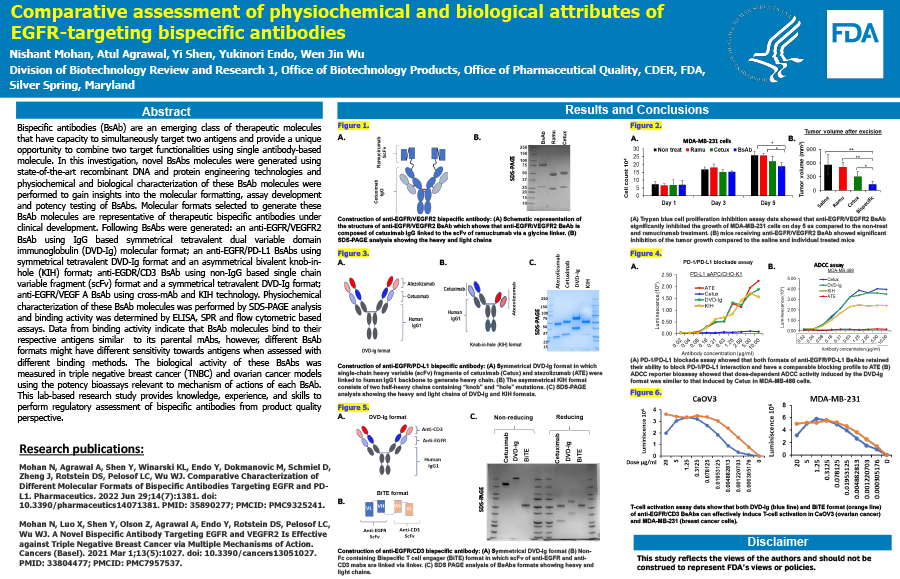
Bispecific antibodies (BsAb) are an emerging class of therapeutic molecules that have capacity to simultaneously target two antigens and provide a unique opportunity to combine two target functionalities using single antibody-based molecule. In this investigation, novel BsAbs molecules were generated using state-of-the-art recombinant DNA and protein engineering technologies and physiochemical and biological characterization of these BsAb molecules were performed to gain insights into the molecular formatting, assay development and potency testing of BsAbs. Molecular formats selected to generate these BsAb molecules are representative of therapeutic bispecific antibodies under clinical development. Following BsAbs were generated: an anti-EGFR/VEGFR2 BsAb using IgG based symmetrical tetravalent dual variable domain immunoglobulin (DVD-Ig) molecular format; an anti-EGFR/PD-L1 BsAbs using symmetrical tetravalent DVD-Ig format and an asymmetrical bivalent knob-in-hole (KIH) format; anti-EGDR/CD3 BsAb using non-IgG based single chain variable fragment (scFv) format and a symmetrical tetravalent DVD-Ig format; anti-EGFR/VEGF A BsAb using cross-mAb and KIH technology. Physiochemical characterization of these BsAb molecules was performed by SDS-PAGE analysis and binding activity was determined by ELISA, SPR and flow cytometric based assays. Data from binding activity indicate that BsAb molecules bind to their respective antigens similar to its parental mAbs, however, different BsAb formats might have different sensitivity towards antigens when assessed with different binding methods. The biological activity of these BsAbs was measured in triple negative breast cancer (TNBC) and ovarian cancer models using the potency bioassays relevant to mechanism of actions of each BsAb. Data from biological activity revealed that different formats exhibit some differences in the inhibitory potency when different cells or assays were used. Taken together, this study provides evidence that the potency of the BsAbs targeting the same antigens can be affected by the respective molecular features, and selection of appropriate cell lines and bioassays are critically important for the assay development and potency testing of BsAbs. This lab-based research study provides knowledge, experience, and skills to perform regulatory assessment of bispecific antibodies from product quality perspective.