2021 FDA Science Forum
Clostridioides Difficile Utilizes the Siderophore Ferrichrome as an Iron Source Through the ABC Transporter FhuDBGC
- Authors:
- Center:
-
Contributing OfficeCenter for Biologics Evaluation and Research
Abstract
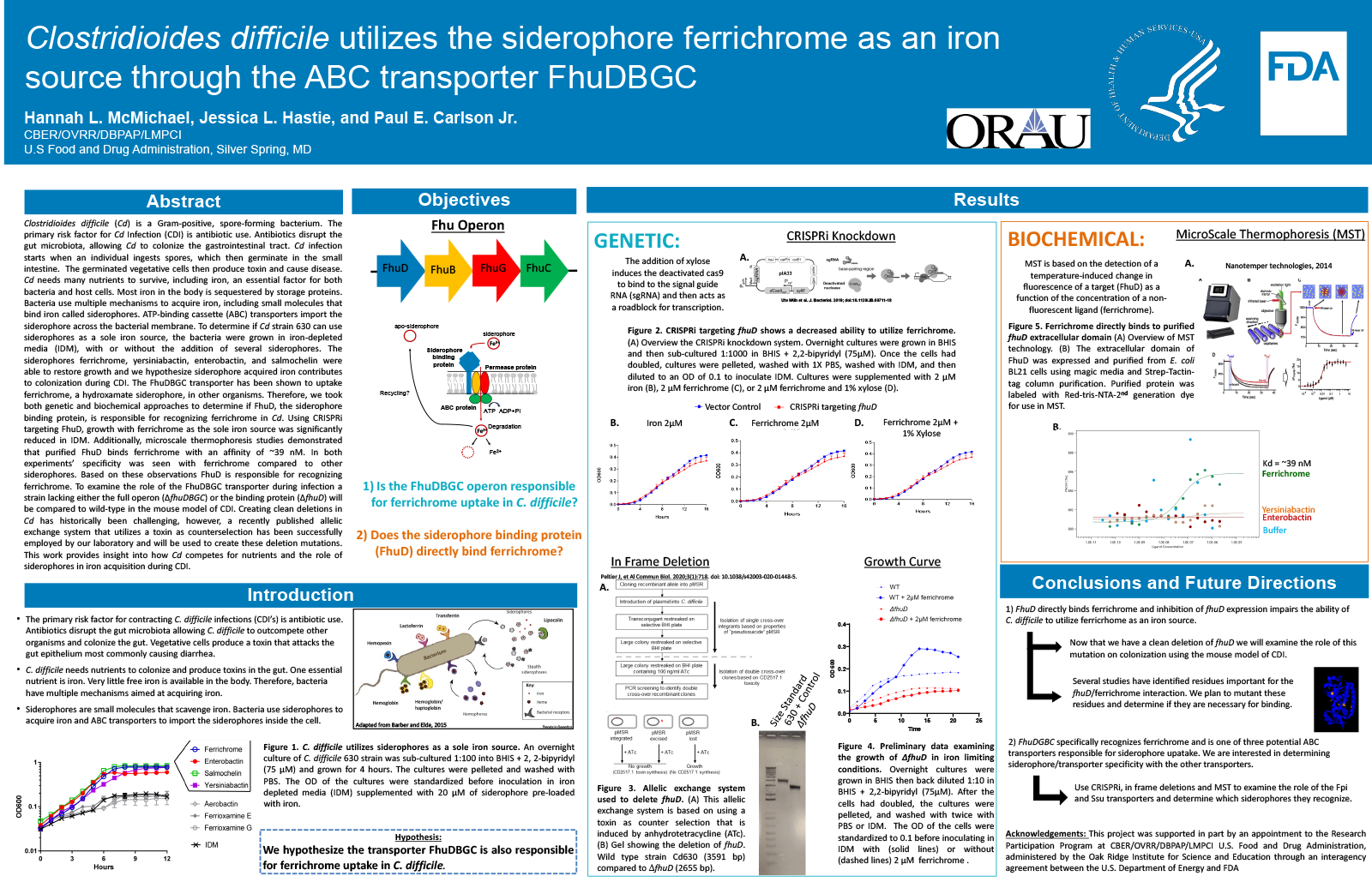
Clostridioides difficile (Cd) is a Gram-positive, spore-forming bacterium. The primary risk factor for Cd Infection (CDI) is antibiotic use. Antibiotics disrupt the gut microbiota, allowing Cd to colonize the gastrointestinal tract. Cd infection starts when an individual ingests spores, which then germinate in the small intestine. The germinated vegetative cells then produce toxin and cause disease. Cd needs many nutrients to survive, including iron, an essential factor for both bacteria and host cells. Most iron in the body is sequestered by storage proteins. Bacteria use multiple mechanisms to acquire iron, including small molecules that bind iron called siderophores. ATP-binding cassette (ABC) transporters import the siderophore across the bacterial membrane. To determine if Cd strain 630 can use siderophores as a sole iron source, the bacteria were grown in iron-depleted media (IDM), with or without the addition of several siderophores. The siderophores ferrichrome, yersiniabactin, enterobactin, and salmochelin were able to restore growth and we hypothesize siderophore acquired iron contributes to colonization during CDI. The FhuDBGC transporter has been shown to uptake ferrichrome, a hydroxamate siderophore, in other organisms. Therefore, we took both genetic and biochemical approaches to determine if FhuD, the siderophore binding protein, is responsible for recognizing ferrichrome in Cd. Using CRISPRi targeting FhuD, growth with ferrichrome as the sole iron source was significantly reduced in IDM. Additionally, thermal shift studies demonstrated that purified FhuD binds ferrichrome with an affinity of ~39 nM. In both experiments’ specificity was seen with ferrichrome compared to other siderophores. Based on these observations FhuD is responsible for recognizing ferrichrome. To examine the role of the FhuDBGC transporter during infection a strain lacking either the full operon (ΔfhuDBGC) or the binding protein (ΔfhuD) will be compared to wild-type in the mouse model of CDI. Creating clean deletions in Cd has historically been challenging, however, a recently published allelic exchange system that utilizes a toxin as counterselection has been successfully employed by our laboratory and will be used to create these deletion mutations. This work provides insight into how Cd competes for nutrients and the role of siderophores in iron acquisition during CDI.