2021 FDA Science Forum
Circulating Biomarkers of Neurotoxicity: Proteomics Approach Reveals Fluidic Endpoints of Central Nervous System Toxicity in a Rodent Model of Neurotoxicity
- Authors:
- Center:
-
Contributing OfficeNational Center for Toxicological Research
Abstract
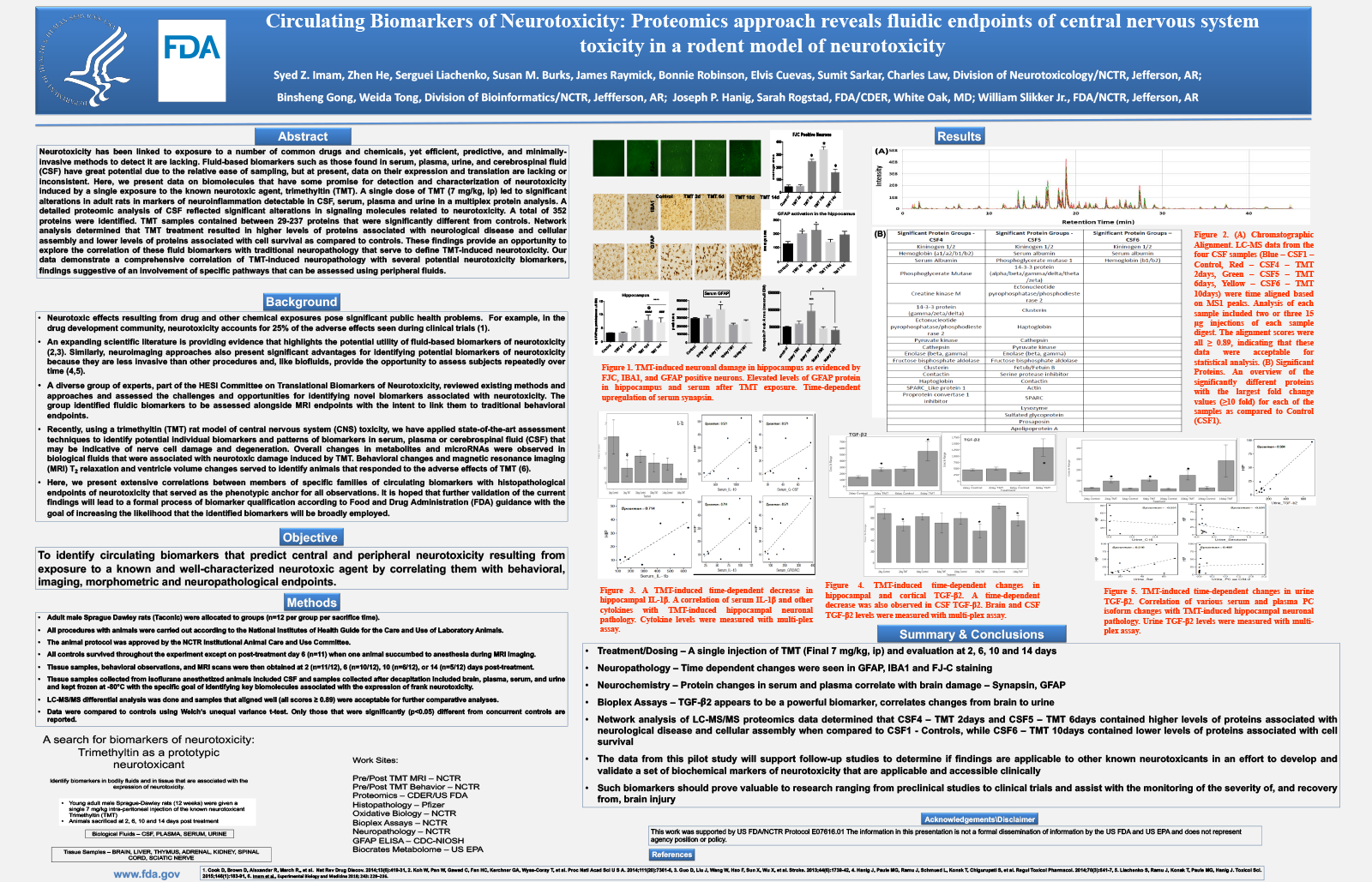
Neurotoxicity has been linked to exposure to a number of common drugs and chemicals, yet efficient, predictive, and minimally-invasive methods to detect it are lacking. Fluid-based biomarkers such as those found in serum, plasma, urine, and cerebrospinal fluid (CSF) have great potential due to the relative ease of sampling, but at present, data on their expression and translation are lacking or inconsistent. Here, we present data on biomolecules that have some promise for detection and characterization of neurotoxicity induced by a single exposure to the known neurotoxic agent, trimethyltin (TMT). A single dose of TMT (7 mg/kg, ip) led to significant alterations in adult rats in markers of neuroinflammation detectable in CSF, serum, plasma and urine in a multiplex protein analysis. A detailed proteomic analysis of CSF reflected significant alterations in signaling molecules related to neurotoxicity. A total of 352 proteins were identified. TMT samples contained between 29-237 proteins that were significantly different from controls. Network analysis determined that TMT treatment resulted in higher levels of proteins associated with neurological disease and cellular assembly and lower levels of proteins associated with cell survival as compared to controls. These findings provide an opportunity to explore the correlation of these fluid biomarkers with traditional neuropathology and magnetic resonance imaging (MRI) that serve to define TMT-induced neurotoxicity. Our data demonstrate a comprehensive correlation of TMT-induced neuropathology with several potential neurotoxicity biomarkers and MRI-based endpoints, findings suggestive of an involvement of specific pathways that can be assessed using peripheral fluids.