2021 FDA Science Forum
Analysis of COVID-19 Patient Experiences Reported through Social Media
- Authors:
- Center:
-
Contributing OfficeCenter for Drug Evaluation and Research
Abstract
Background
Patients frequently use social media forums to discuss their medical history and healthcare experiences. These forums contain large volumes of available data that can provide early insight into real-world patient experiences.
Objective
To describe methods used to analyze COVID-19 patient experience data reported through Reddit social media posts.
Methods
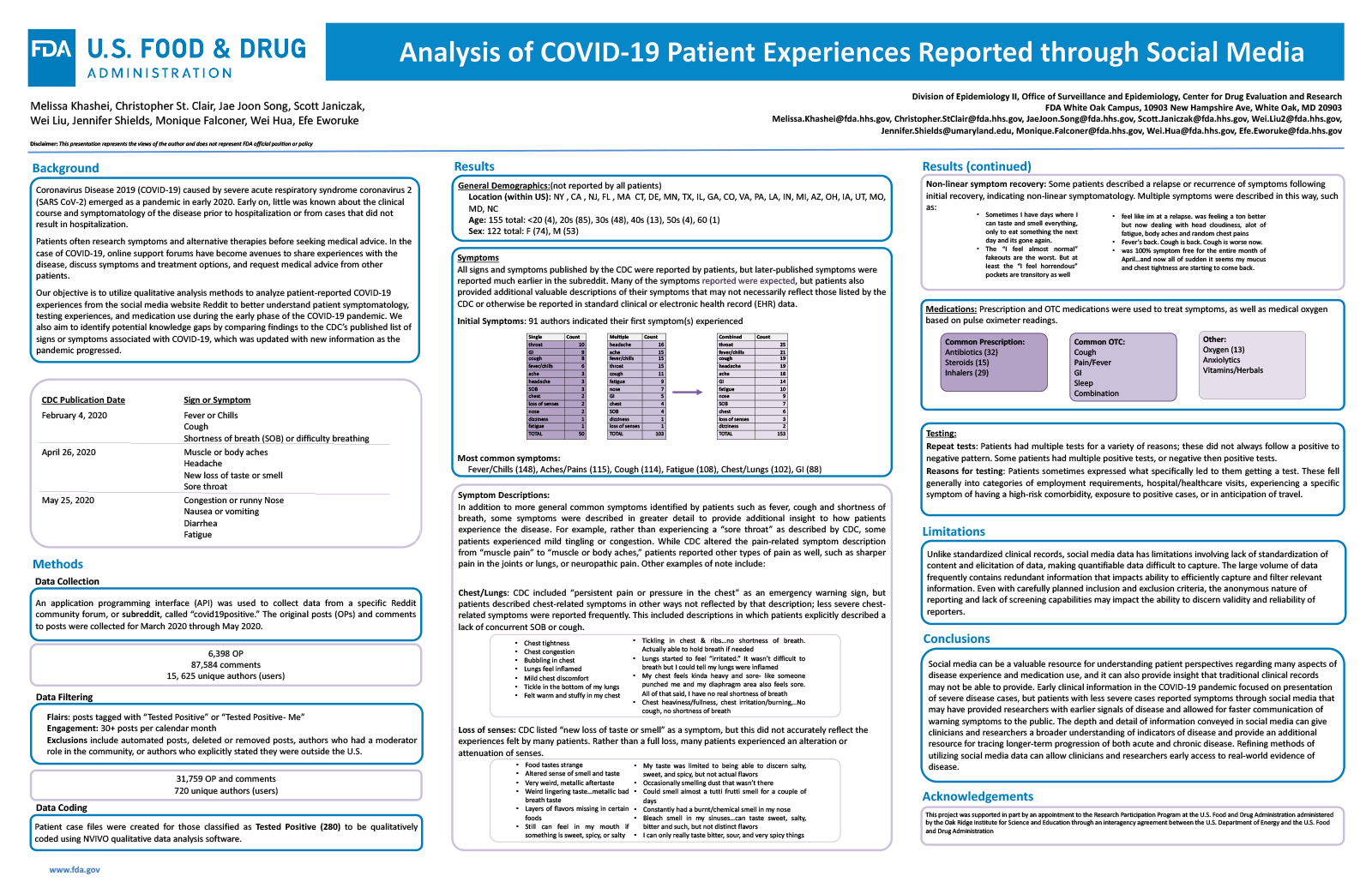
Reddit data was extracted for the subreddit r/covid19positive from March to May 2020 and narrowed to authors who tagged their original posts with a “Tested Positive” or “Tested Positive- Me” flair or who posted or commented at least thirty times in any calendar month. Subreddit moderators and authors who explicitly stated location outside of the U.S. were further excluded. Patients were then classified as Tested Positive, Tested Negative, Unconfirmed/Questionable, or Commenter only based on their reported COVID-19 testing status. For tested-positive patients, individual case profiles summarizing their COVID-19 symptoms, testing, and medications or treatments were reported. Case profiles were reviewed to identify common trends or themes.
Results
There were 6,398 original posts and 87,584 comments that came from 15,624 unique authors from March to May; 712 authors met the inclusion criteria. Of these, 44% (312) tested positive, 12% (85) tested negative, 29% (205) had unconfirmed testing status and 15% (110) were commenters only. Case profiles were created for approximately 90% (n=280) of the Tested Positive authors. Preliminary review of those case profiles indicated that patients were reporting classic symptoms of COVID-19 such as fever, cough, shortness of breath, fatigue and loss of taste or smell. Patients also reported descriptions of their symptoms (ex. “I am not 100% better but I can taste sweet, salty, bitter and such, but not distinct flavors quite yet”), motivations for testing, and long-term impacts such as post-viral fatigue.
Conclusions
Social media data can provide early preliminary insights into patient disease experiences that might not be available in traditional pharmacoepidemiologic databases. However, there are unique challenges in processing the data to capture pertinent information. Machine learning methods, such as natural language processing may improve the ability to capture relevant data from these large volume datasets.