2021 FDA Science Forum
Adapting Next-Generation Genetic Toxicology Endpoints to the Human In Vitro Air-Liquid-Interface Airway Tissue Model
- Authors:
- Center:
-
Contributing OfficeNational Center for Toxicological Research
Abstract
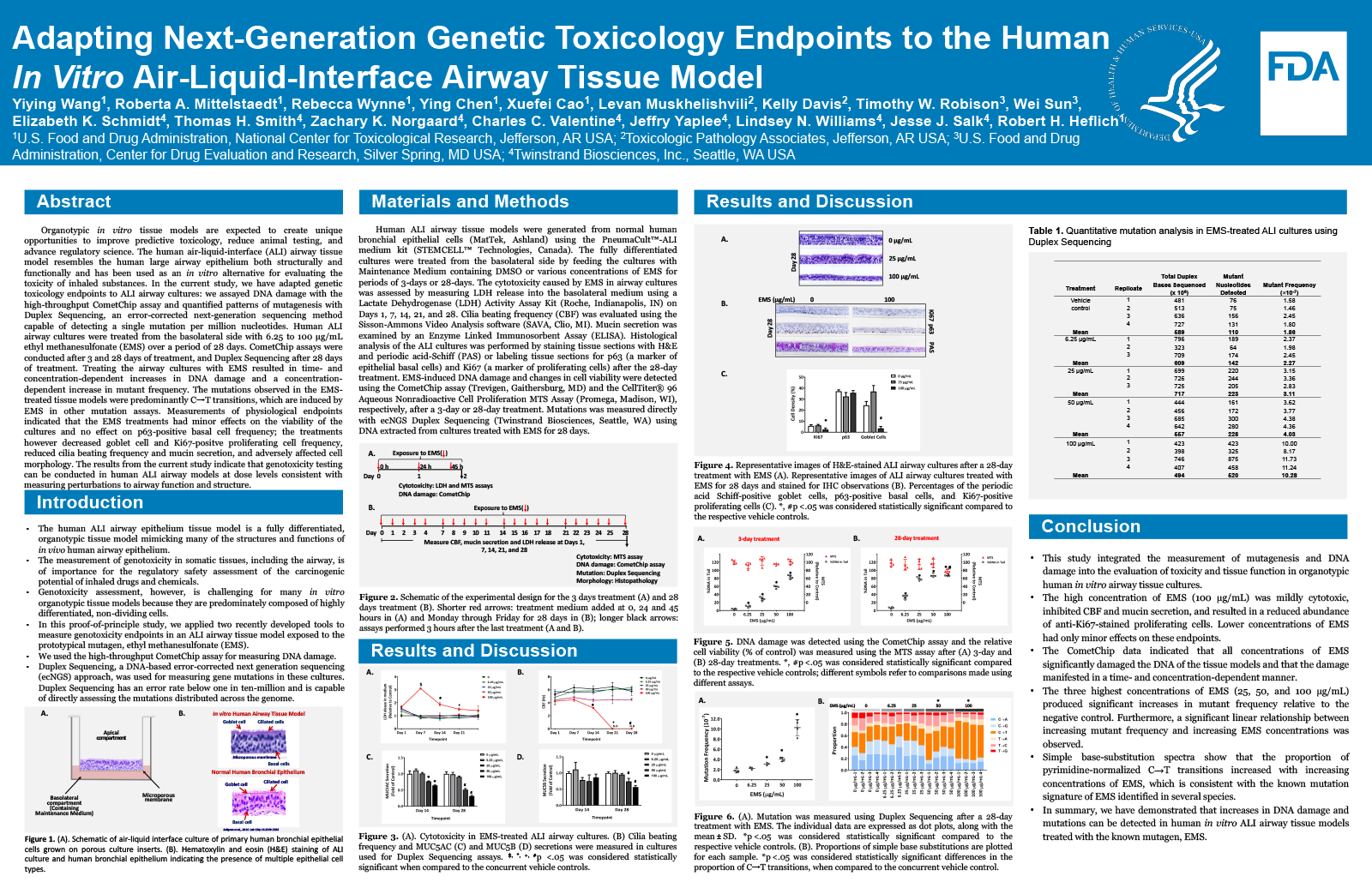
Organotypic in vitro tissue models are expected to create unique opportunities to improve predictive toxicology, reduce animal testing, and advance regulatory science. The human air-liquid-interface (ALI) airway tissue model resembles the human large airway epithelium both structurally and functionally and has been used as an in vitro alternative for evaluating the toxicity of inhaled substances. In the current study, we have adapted genetic toxicology endpoints to ALI airway cultures: we assayed DNA damage with the high-throughput CometChip assay and quantified patterns of mutagenesis with Duplex Sequencing, an error-corrected next-generation sequencing method capable of detecting a single mutation per million nucleotides. Human ALI airway cultures were treated from the basolateral side with 6.25 to 100 µg/mL ethyl methanesulfonate (EMS) over a period of 28 days. CometChip assays were conducted after 3 and 28 days of treatment, and Duplex Sequencing after 28 days of treatment. Treating the airway cultures with EMS resulted in time- and concentration-dependent increases in DNA damage and a concentration-dependent increase in mutant frequency. The mutations observed in the EMS-treated tissue models were predominantly C?T transitions, which are induced by EMS in other mutation assays. Measurements of physiological endpoints indicated that the EMS treatments had minor effects on the viability of the cultures and no effect on p63-positive basal cell frequency; the treatments however decreased goblet cell and Ki67-positve proliferating cell frequency, reduced cilia beating frequency and mucin secretion, and adversely affected cell morphology. The results from the current study indicate that genotoxicity testing can be conducted in human ALI airway models at dose levels consistent with measuring perturbations to airway function and structure.