2021 FDA Science Forum
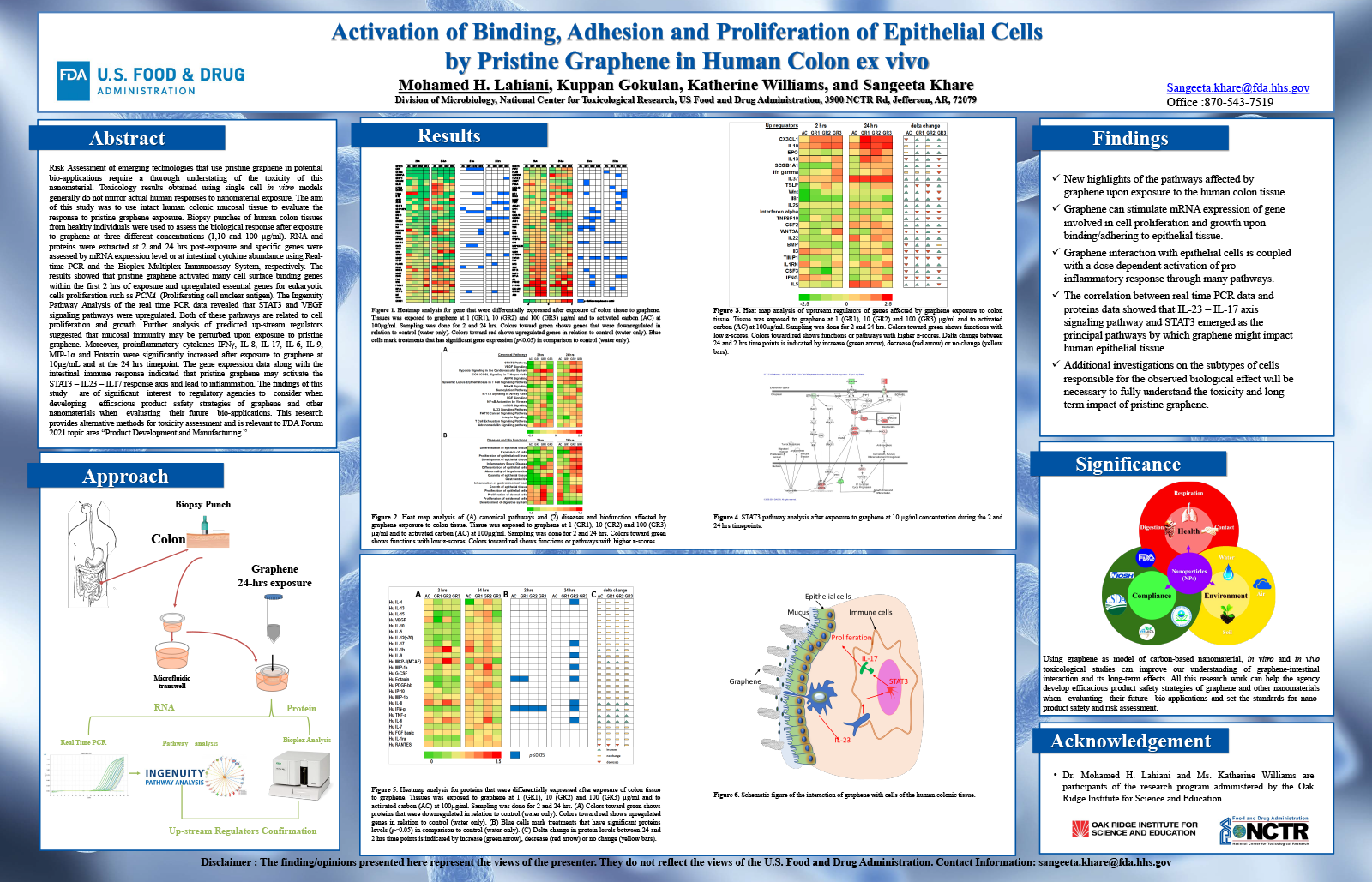
Activation of Binding, Adhesion and Proliferation of Epithelial Cells by Pristine Graphene in Human Colon Ex Vivo
- Authors:
- Center:
-
Contributing OfficeNational Center for Toxicological Research
Abstract
Risk Assessment of emerging technologies that use pristine graphene in potential bio-applications require a thorough understating of the toxicity of this nanomaterial. Toxicology results obtained using single cell in vitro models generally do not mirror actual human responses to nanomaterial exposure. The aim of this study was to use intact human colonic mucosal tissue to evaluate the response to pristine graphene exposure. Biopsy punches of human colon tissues from healthy individuals were used to assess the biological response after exposure to graphene at three different concentrations (1,10 and 100 µg/ml). RNA and proteins were extracted at 2 and 24 hrs post-exposure and specific genes were assessed by mRNA expression level or at intestinal cytokine abundance using Real-time PCR and the Bioplex Multiplex Immunoassay System, respectively. The results showed that pristine graphene activated many cell surface binding genes within the first 2 hrs of exposure and upregulated essential genes for eukaryotic cells proliferation such as PCNA gene (Proliferating cell nuclear antigen). The Ingenuity Pathway Analysis of the real time PCR data revealed that STAT3 and VEGF signaling pathways were upregulated. Both of these pathways are related to cell proliferation and growth. Further analysis of predicted up-stream regulators suggested that mucosal immunity may be perturbed upon exposure to pristine graphene. Furthermore, proinflammatory cytokines IFN, IL-8, IL-17, IL-6, IL-9, MIP-1α and Eotaxin were significantly increased after exposure to graphene at 10µg/mL and at the 24 hrs timepoint. The gene expression data along with the intestinal immune response indicated that pristine graphene may activate the STAT3 – IL23 – IL17 response axis and lead to inflammation. The findings of this study are of significant interest to regulatory agencies to consider when developing efficacious product safety strategies of graphene and other nanomaterials when evaluating their future bio-applications. This research provides alternative methods for toxicity assessment and is relevant to FDA Forum 2021 topic area “Product Development and Manufacturing.