


FDA Advisory: Certain Lots of Quest Cat Food Pose Serious Health Risks Due to Extremely Low Levels of Thiamine (Vitamin B1)
March 13, 2026
Fast Facts
- The U.S. Food and Drug Administration is cautioning the public that agency testing shows eight lots of Quest Cat Food contain extremely low or no thiamine (vitamin B1), a vitamin essential to cat health.
- If you have any of the lots of Quest Cat Food listed in the Product information section of this advisory, the FDA recommends consulting with a veterinarian about whether to continue feeding your cat the affected products. Consumers should be aware that although the products are labeled as complete diets that fully meet a cat’s nutritional needs, the products contain extremely low or no thiamine. Continued feeding could result in thiamine deficiency, which causes serious health issues in cats, including death.
- The FDA recommended that Go Raw LLC doing business as (dba) Steve’s Real Food recall eight product lots. To date, the firm has only recalled three lots. The FDA is issuing this advisory to make the public aware of all FDA-tested lots that contain extremely low or no thiamine.
What is going on?
The FDA has received multiple consumer complaints reporting severe thiamine deficiency in cats eating certain lots of frozen and freeze-dried Quest Cat Food. See Product information section of this advisory for details on affected varieties and lot codes of Quest Cat Food.
The FDA first became aware of this issue after receiving a report from a veterinary neurologist about severe symptoms of thiamine deficiency in a cat that ate one of the affected lots of Quest Cat Food. FDA testing confirmed the food contained extremely low thiamine.
The agency tested additional Quest Cat Food lots due to additional reports of cat illnesses associated with Quest Cat Food. All eight lots tested by the FDA contained extremely low or no thiamine.
The FDA recommended that Go Raw LLC doing business as (dba) Steve’s Real Food recall eight product lots. To date, the firm has only recalled three lots. Although Steve’s Real Food has publicly stated it is stopping the sale of all Quest Cat Food until the thiamine deficiency issue has been addressed, the firm has not provided evidence to show the FDA that the remaining product lots have been removed from the marketplace and customers have been adequately notified about which products may be affected and the risks the products pose.
What do I need to do?
If you have any of the lots of Quest Cat Food listed in this advisory, the FDA recommends consulting with a veterinarian about whether to continue feeding your cat the affected products. Consumers should be aware that although the products are labeled as complete diets that fully meet a cat’s nutritional needs, they contain extremely low or no thiamine. Continued feeding could result in thiamine deficiency, which causes serious health issues in cats, including death.
Early signs of thiamine deficiency in cats may present as gastrointestinal symptoms, including decreased appetite and vomiting. Some cats may start to show symptoms in as little as one week, but for others it may take months to become symptomatic. As thiamine deficiency advances, cats may develop symptoms such as bending of the neck in a downward position with inability to raise the head (cervical ventroflexion), muscle weakness, loss of appetite, wobbly gait, falling, seizures, and circling. If left untreated, thiamine deficiency can be deadly.
If a cat has eaten one or more of the products described in this advisory and is showing symptoms of thiamine deficiency, stop feeding the products and consult a veterinarian immediately. When a thiamine deficiency is caught early, the symptoms typically resolve after making dietary changes.
Product Information
Quest Cat Food is a line marketed by Go Raw LLC dba Steve’s Real Food. Quest Cat Food is sold online and distributed nationwide through retail stores.
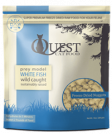
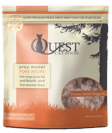
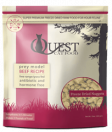
The affected freeze-dried cat food products are sold in 10-ounce beige zip-top bags. Chicken products have purple labeling, pork products have orange labeling, white fish products have blue labeling, and beef products have pink labeling.
The affected frozen cat food products are sold in 2-pound beige zip-top bags, and the chicken products have purple labeling.
The product date codes are printed on the front of the bag. If you no longer have the package or cannot read the lot code, exercise caution and assume the product may not contain adequate levels of thiamine.
The FDA tested the products listed in the table below to assess thiamine levels. Steve’s Real Food has recalled the first three products.
Thiamine Levels in Steve’s Real Food Products Tested by FDA
| Quest Cat Food Product | Lot Code | Best By or Use By Date | Level of Thiamine | Percentage of minimum thiamine level |
|---|---|---|---|---|
| Prey Model Chicken Recipe Freeze Dried Nuggets | C25288 | 10/15/27 | 0.22 mg/kg | 3.9% |
| Prey Model Chicken Diet Bite Size Nuggets, frozen | MCD25350 | 06/16/27 | No thiamine detected | 0% |
| Prey Model Chicken Diet Bite Size Nuggets, frozen | MCC25321 | 05/17/27 | No thiamine detected | 0% |
| Prey Model Pork Recipe Freeze Dried Nuggets | C25358 | 12/24/27 | Less than 0.1 mg/kg | Less than 1.8% |
| Prey Model Beef Recipe Freeze Dried Nuggets | C25318 | 11/14/27 | Less than 0.1 mg/kg | Less than 1.8% |
| Prey Model White Fish Freeze Dried Nuggets | C25337 | 12/03/27 | 0.85 mg/kg | 15.2% |
| Prey Model Chicken Recipe Freeze Dried Nuggets | C25336 | 12/02/27 | 0.21 mg/kg | 3.75% |
| Prey Model Pork Recipe Freeze Dried Nuggets | C25321 | 11/17/27 | 0.32 mg/kg | 5.7% |
Note: The minimum thiamine level identified by the Association of American Feed Control Officials (AAFCO) Cat Food Nutrient Profile (the standard commonly used in the pet food industry) is 5.6 mg/kg. All tested products fell far below this standard.

|

| 
|
| 
|
Representative product photos from stevesrealfood.com
Why is the FDA concerned about low or absent thiamine in Quest Cat Food?
Thiamine is an essential vitamin for cat health. Cats require approximately four times more thiamine in their diets than dogs. The AAFCO Cat Food Nutrient Profile establishes a minimum nutritional level of 5.6 mg thiamine per kg of food on a dry matter basis for cat health. All of the Quest Cat Food samples tested by the FDA contained levels well below 5.6 mg per kg.
Although Quest Cat Food product labeling includes a nutritional adequacy statement that the food is “formulated to meet the nutritional levels established by AAFCO Cat Food Nutrient Profiles for All Life Stages,” cats consuming certain lots of Quest Cat Food as a sole source of nutrition have experienced symptoms of thiamine deficiency.
How can I report a pet illness?
People who think their pets have become ill after consuming Quest Cat Food should first contact their veterinarians.
The FDA encourages consumers to report complaints about pet food products electronically through the Safety Reporting Portal. Additionally, consumers can visit the SmartHub – Safety Intake Portal – Report a Product Problem (fda.gov) to obtain electronic assistance with submitting a report.