


Toward More Effective Treatment of Blood Clotting Disorders: Pharmacogenomic Studies of ADAMTS13 and Related Proteins

Chava Kimchi-Sarfaty, Ph.D.
Office of Tissues and Advanced Therapies
Division or Plasma Protein Therapeutics
Hemostasis Branch
Chava.Kimchi-Sarfaty@fda.hhs.gov
Biosketch
Dr. Kimchi-Sarfaty earned her M.Sc and Ph.D in Genetics from the Hebrew University and Hadassah Medical Center in Jerusalem. Her post-doctoral training was at the National Cancer Institute in Bethesda MD, working mostly on gene therapy. Subsequently, she moved to the FDA where she set up her independent research group in the Division of Plasma Protein Therapeutics, Office of Tissues and Advanced Therapies (OTAT) that focuses on pharmacogenetics and pharmacogenomics. Her research, which uses blood coagulation factors as model systems, is broadly applicable to therapeutic proteins, gene therapy, and gene editing. Her pioneering work that demonstrated that synonymous mutations affect protein folding and function overturned a dogma in biology and has wide ramifications in the basic understanding of biology, drug development, and the practice of medicine. Because synonymous mutations do not alter the amino acid sequence, they were assumed to be innocuous. She was among the first to demonstrate that this assumption is inaccurate. Increased scientific awareness of the potential deleterious effects of synonymous mutations has led to the reevaluation of many diseases associated with so-called silent mutations. At the FDA, much of her research in synonymous mutations and codon optimization focuses on recombinant protein therapeutics and gene therapy, which often contain at least one synonymous mutation. Her group has characterized many naturally occurring synonymous mutations with pathogenic implications, using both novel and existing protein characterization techniques and in silico tools. In addition, based on her strong familiarity with coagulation factors, she reviews and chairs pre-INDs, INDs and BLAs for recombinant proteins and plasma derivatives products, such as von Willebrand factor, ADAMTS13, factor VIII, factor IX, thrombin, and fibrinogen. Dr. Kimchi-Sarfaty works with the industry in support of the development of new coagulation recombinant proteins and she is a lead scientific reviewer of the Expert Committee on Biological Standardization applications.
General Overview
Our research group focuses on understanding the significance of the genetic sequences used to synthesize therapeutic proteins. Recombinant proteins (proteins made using genetic engineering) that are used to treat blood clotting disorders have several advantages over human plasma-derived products. Unlike the latter, which must be harvested from a pool of donor plasma, recombinant proteins can be manufactured cost-effectively under defined conditions, with decreased risk of viral contamination, increased product uniformity and flexibility in product design. Our research group focuses on understanding the significance of the genetic sequences used to synthesize these therapeutic proteins. Recently, we have expanded our research program to study how manipulation of viral genetic sequences can be used for vaccine development.
In all organisms, genetic sequences define the order in which amino acids are incorporated into a growing protein. These sequences have been shown to vary from person to person, sometimes without changing the amino acid backbone of a given protein. As a result, in recombinant protein production or gene therapy, industry has had flexibility to choose genetic sequences that are translated more efficiently and therefore are more cost effective. However, there is increasing awareness that variations in the sequence can significantly affect the protein's function, stability, distribution, and immunogenicity (how readily it triggers an immune response). Furthermore, the expression system and the level of expression may also have such effects in recombinant proteins. To address this issue, we are developing sensitive laboratory assays that can explore subtle structural differences that may exist in therapeutic proteins.
Currently, we are using a combination of in silico (computer analysis) and laboratory-based assays to study the pharmacogenomics of three blood clotting proteins: factor IX (FIX), ADAMTS13, an anti-clotting factor, and its target, von Willebrand factor (VWF). FIX is an enzyme that helps carry out blood clotting and has been extensively studied over the past few decades. The absence of functional FIX within the blood leads to hemophilia B. FDA has approved both plasma-derived and recombinant FIX replacement products. We are studying the role of ADAMTS13, the VWF-cleaving protease, in coagulopathy and thrombosis. We are examining test methods for the balance between VWF and ADAMTS13 as the cause of thrombosis in neonates and severe COVID-19 patients.
In order to engineer better and more effective recombinant proteins and gene therapy vectors, we have developed an online database that calculates the frequency with which different codons and codon-pairs occur in organisms, called Codon and Codon Pair Usage Tables (CoCoPUTs). Recently, we expanded CoCoPUTs to include transcriptomic data specific to different tissues (TissueCoCoPUTs).
Since the outbreak of the COVID-19 pandemic, we were able to use these databases to design attenuated virus vaccines. Virus attenuation can be achieved through codon and/or codon pair deoptimization. By utilizing our expertise in codon/codon pair optimization we were able to promptly direct our efforts towards characterizing the virus sequence and developing deoptimization strategies. Collaborative efforts have been organized in order to validate experimentally these deoptimization strategies.
The in silico and in vitro methods that we are exploring may enable researchers and industry to produce safer therapeutic proteins and expediate vaccine development. Currently, there are limited FDA guidelines regulating genetic sequences used to manufacture these therapeutics; the establishment of such guidance will help to ensure that only safe and effective therapeutics enter clinical development.
Scientific Overview
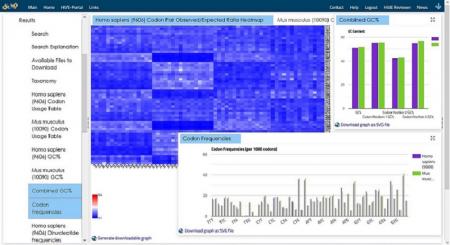
Today, there is unprecedented interest in gene engineering, for generation of recombinant therapeutic proteins, for gene therapy and for vaccine development. Gene engineering design often includes non-synonymous and synonymous mutations. While amino acid substitutions are well recognized for their ability to alter protein structure and function, it was long assumed that synonymous mutations do not exert meaningful impact on expression, structure, functionality, or immunogenicity of the protein. However, there is increasing scientific evidence to the contrary.
FDA must develop guidelines for assessing the efficacy and safety of recombinant genes and the proteins they encode. We are applying and constructing both computational and in vitro tools to better understand the consequences of synonymous mutations introduced by genetic engineering with an emphasis on codon and codon pair optimization or deoptimization.
The lack of scientific insight concerning how the genetic code impacts protein biogenesis represents a key regulatory hurdle. We therefore seek to better describe these mechanisms experimentally using 1) naturally-occurring non-synonymous and synonymous mutations, 2) codon-optimized recombinant proteins, and 3) expression systems with multiple and single integration sites, to be able to assess the effect of expression levels on protein structure and function. Currently, we are focusing on three therapeutic recombinant blood proteins: ADAMTS13 (the von Willebrand factor (VWF)-cleaving protease), VWF and coagulation Factor IX (FIX). In addition, due to the COVID-19 pandemic, we expanded our studies to examine how synonymous codon substitutions in the form of codon pair deoptimization can lead to viral attenuation for vaccine development.
Our work has demonstrated that single synonymous mutations in FIX can induce mild hemophilia B through multiple cellular mechanisms. Additionally, our ongoing characterization of codon-optimized FIX has revealed variable changes to protein expression, structure and function. Through a novel molecular biology technique termed ribosome-profiling, we showed that codon optimization alters local translation kinetics. Furthermore, we have demonstrated that several synonymous polymorphisms in ADAMTS13 can modulate its activity, conformation and stability and may rescue the phenotype when in conjunction with a deleterious ADAMTS13 mutation that would otherwise cause thrombotic thrombocytopenic purpura (TTP).
We are continuing to study genotype-phenotype relationships in FIX, ADAMTS13 and VWF, and we are expanding our studies to develop curated databases on several disease-associated genes with the aim to generate tools to predict disease based on genotype.
We have also developed a database with genomic codon and codon-pair usage data of species using the latest publicly available sequences. This will aide in genetic engineering techniques and broaden our understanding of genetic evolution. We have expanded this tool to include tissue-specific codon usage to explore codon usage bias across human tissues.
An overarching goal of this work is to study gene expression, protein biogenesis, structure, and function. This will facilitate development of standard protocols for assessing the safety and efficacy of recombinant therapeutic proteins. To this end, we have applied many established techniques to characterize the consequences of polymorphisms in FIX and ADAMTS13. We are incorporating new techniques that harness NGS technology to more effectively assess in vivo mRNA structure, tRNA composition, and co-translational protein folding.
Important Links
- Guidance for Industry: Clinical Pharmacogenomics: Premarket Evaluation in Early-Phase Clinical Studies and Recommendations for Labeling
- Dr. Kimchi-Sarfaty is a member of the prestigious Faculty 1000 website: https://f1000.com/prime/thefaculty/member/6750122262051486
- A new website carrying revised and updated codon usage is available at: https://hive.biochemistry.gwu.edu/review/codon
- A gene-specific method for predicting hemophilia-causing point mutations: https://www.ncbi.nlm.nih.gov/CBBresearch/Przytycka/index.cgi#hapredictor
- Measurement of Single-Nucleotide Polymorphism-induced Changes of RNA Conformation: https://www.ncbi.nlm.nih.gov/CBBresearch/Przytycka/index.cgi#remurna
- Dr. Kimchi-Sarfaty ORCID site: https://orcid.org/0000-0002-9355-8585
Publications
- Trends Genet 2024 Mar;40(3):276-90
Advances in methods for tRNA sequencing and quantification.
Padhiar NH, Katneni U, Komar AA, Motorin Y, Kimchi-Sarfaty C - Br J Haematol 2024 Feb;204(2):399-401
A synonymous variant is unmasked in thalassaemia.
Hunt RC, Kimchi-Sarfaty C - Genome Biol 2023 May 22;24(1):126
In silico methods for predicting functional synonymous variants.
Lin BC, Katneni U, Jankowska KI, Meyer D, Kimchi-Sarfaty C - Trends Pharmacol Sci 2023 Feb;44(2):73-84
Implementing computational methods in tandem with synonymous gene recoding for therapeutic development.
Lin BC, Kaissarian NM, Kimchi-Sarfaty C - Virol J 2023 Feb 17;20(1):31
Analysis of 3.5 million SARS-CoV-2 sequences reveals unique mutational trends with consistent nucleotide and codon frequencies.
Fumagalli SE, Padhiar NH, Meyer D, Katneni U, Bar H, DiCuccio M, Komar AA, Kimchi-Sarfaty C - Hum Mutat 2022 Dec;43(12):2324-5
Multiple mechanisms contribute to the phenotypic effects of synonymous variants.
Katneni U, Kimchi-Sarfaty C - Blood Adv 2022 Sep 27;6(18):5364-78
Synonymous ADAMTS13 variants impact molecular characteristics and contribute to variability in active protein abundance.
Jankowska KI, Meyer D, Holcomb DDF, Kames J, Hamasaki-Katagiri N, Katneni UK, Hunt RC, Ibla JC, Kimchi-Sarfaty C - J Thromb Haemost 2022 Sep;20(9):2098-108
Contribution of ADAMTS13-independent VWF regulation in sickle cell disease.
Hunt RC, Katneni U, Yalamanoglu A, Indig FE, Ibla JC, Kimchi-Sarfaty C - STAR Protoc 2022 Sep 16;3(3):101648
Protocol to identify host-viral protein interactions between coagulation-related proteins and their genetic variants with SARS-CoV-2 proteins.
Holcomb DD, Jankowska KI, Hernandez N, Laurie K, Kames J, Hamasaki-Katagiri N, Komar AA, DiCuccio M, Kimchi-Sarfaty C - J Natl Cancer Inst 2022 Aug;114(8):1072-94
Synonymous variants: necessary nuance in our understanding of cancer drivers and treatment outcomes.
Kaissarian NM, Meyer D, Kimchi-Sarfaty C - N Engl J Med 2022 Aug 25;387(8):753-6
When silence disrupts.
Hunt RC, Kimchi-Sarfaty C - Blood Adv 2022 Jul 12;6(13):3932-44
Structural, functional, and immunogenicity implications of F9 gene recoding.
Katneni U, Alexaki A, Hunt R, Katagiri N, Hettiarachchi G, Kames J, McGill JR, Holcomb DDF, Athey J, Lin B, Parunov LA, Kafri T, Lu Q, Peters RT, Ovanesov MV, Freedberg D, Bar H, Komar AA, Sauna ZE, Kimchi-Sarfaty C - Processes 2022 Feb;10(2):322
An optimized purification design for extracting active ADAMTS13 from conditioned media.
Jankowska KI, Katneni U, Lin BC, Amarasinghe R, Phue JN, Wu WW, Hamasaki-Katagiri N, Jankowski W, Shen RF, Kimchi-Sarfaty C - Am J Hum Genet 2021 Aug 5;108(8):1502-11
New approaches to predict the effect of co-occurring variants on protein characteristics.
Holcomb D, Hamasaki-Katagiri N, Laurie K, Katneni U, Kames J, Alexaki A, Bar H, Kimchi-Sarfaty C - Genome Med 2021 Jul 28;13(1):122
Distinct signatures of codon and codon pair usage in 32 primary tumor types in the novel database CancerCoCoPUTs for cancer-specific codon usage.
Meyer D, Kames J, Bar H, Komar AA, Alexaki A, Ibla J, Hunt RC, Santana-Quintero LV, Golikov A, DiCuccio M, Kimchi-Sarfaty C - Open Forum Infect Dis 2021 Jun;8(6):ofab189
In silico evaluation of cyclophilin inhibitors as potential treatment for SARS-CoV-2.
Laurie K, Holcomb D, Kames J, Komar AA, DiCuccio M, Ibla JC, Kimchi-Sarfaty C - PLoS Comput Biol 2021 Mar 17;17(3):e1008805
Gene variants of coagulation related proteins that interact with SARS-CoV-2.
Holcomb D, Alexaki A, Hernandez N, Hunt R, Laurie K, Kames J, Hamasaki-Katagiri N, Komar AA, DiCuccio M, Kimchi-Sarfaty C - Thromb Haemost 2020 Dec;120(12):1668-79
Coagulopathy and thrombosis as a result ofsSevere COVID-19 infection: a microvascular focus.
Katneni UK, Alexaki A, Hunt RC, Schiller T, DiCuccio M, Buehler PW, Ibla JC, Kimchi-Sarfaty C - Sci Rep 2020 Sep 24;10(1):15643
Sequence analysis of SARS-CoV-2 genome reveals features important for vaccine design.
Kames J, Holcomb DD, Kimchi O, DiCuccio M, Hamasaki-Katagiri N, Wang T, Komar AA, Alexaki A, Kimchi-Sarfaty C - Toxicol Sci 2020 Sep;177(1):235-47
Polyethylene oxide molecular size determines the severity of atypical thrombotic microangiopathy in a guinea pig model of acute intravenous exposure.
Baek JH, Shin HKH, Koo SM, Gao Y, Qu H, Feng X, Xu X, Pinto J, Katneni U, Kimchi-Sarfaty C, Buehler PW - Thromb Res 2020 Sep;193:66-76
In silico features of ADAMTS13 contributing to plasmatic ADAMTS13 levels in neonates with congenital heart disease.
Katneni UK, Holcomb DD, Hernandez NE, Hamasaki-Katagiri N, Hunt RC, Bar H, Ibla JC, Kimchi-Sarfaty C - J Mol Biol 2020 May 15;432(11):3369-78
TissueCoCoPUTs: novel human tissue-specific codon and codon-pair usage tables based on differential tissue gene expression.
Kames J, Alexaki A, Holcomb DD, Santana-Quintero LV, Athey JC, Hamasaki-Katagiri N, Katneni U, Golikov A, Ibla JC, Bar H, Kimchi-Sarfaty C - F1000Res 2020 Mar 10;9:174
Ribosome profiling of HEK293T cells overexpressing codon optimized coagulation factor IX.
Alexaki A, Kames J, Hettiarachchi GK, Athey JC, Katneni UK, Hunt RC, Hamasaki-Katagiri N, Holcomb DD, DiCuccio M, Bar H, Komar AA, Kimchi-Sarfaty C - Int J Mol Sci 2019 Nov 15;20(22):5734
A single synonymous variant (c.354G>A [p.P118P]) in ADAMTS13 confers enhanced specific activity.
Hunt R, Hettiarachchi G, Katneni U, Hernandez N, Holcomb D, Kames J, Alnifaidy R, Lin B, Hamasaki-Katagiri N, Wesley A, Kafri T, Morris C, Bouche L, Panico M, Schiller T, Ibla J, Bar H, Ismail A, Morris H, Komar A, Kimchi-Sarfaty C - Sci Rep 2019 Oct 29;9(1):15449
Effects of codon optimization on coagulation factor IX translation and structure: implications for protein and gene therapies.
Alexaki A, Hettiarachchi GK, Athey JC, Katneni UK, Simhadri V, Hamasaki-Katagiri N, Nanavaty P, Lin B, Takeda K, Freedberg D, Monroe D, McGill JR, Peters R, Kames JM, Holcomb DD, Hunt RC, Sauna ZE, Gelinas A, Janjic N, DiCuccio M, Bar H, Komar AA, Kimchi-Sarfaty C - Infect Genet Evol 2019 Sep;73:266-8
The Kazusa codon usage database, CoCoPUTs, and the value of up-to-date codon usage statistics.
Holcomb DD, Alexaki A, Katneni U, Kimchi-Sarfaty C - Mol Genet Genomic Med 2019 Aug;7(8):e840
Splicing dysregulation contributes to the pathogenicity of several F9 exonic point variants.
Katneni UK, Liss A, Holcomb D, Katagiri NH, Hunt R, Bar H, Ismail A, Komar AA, Kimchi-Sarfaty C - Am J Physiol Gastrointest Liver Physiol 2019 Jun 1;316(6):G720-34
Translational and transcriptional responses in human primary hepatocytes under hypoxia.
Hettiarachchi GK, Katneni UK, Hunt RC, Kames JM, Athey JC, Bar H, Sauna ZE, McGill JR, Ibla JC, Kimchi-Sarfaty C - J Mol Biol 2019 Jun 14;431(13):2434-41
Codon and codon-pair usage tables (CoCoPUTs): facilitating genetic variation analyses and recombinant gene design.
Alexaki A, Kames J, Holcomb DD, Athey J, Santana-Quintero LV, Lam PVN, Hamasaki-Katagiri N, Osipova E, Simonyan V, Bar H, Komar AA, Kimchi-Sarfaty C - J Thromb Haemost 2019 Mar;17(3):429-40
Von Willebrand Factor/ADAMTS-13 interactions at birth: implications for thrombosis in the neonatal period.
Katneni UK, Ibla JC, Hunt R, Schiller T, Kimchi-Sarfaty C - J Thromb Haemost 2017 Dec;15(12):2306-16
Elevated preoperative von Willebrand Factor is associated with perioperative thrombosis in infants and neonates with congenital heart disease.
Hunt R, Hoffman CM, Emani S, Trenor CC 3rd, Emani SM, Faraoni D, Kimchi-Sarfaty C, Ibla JC - Thromb Res 2017 Oct;158:98-101
Compounding variants rescue the effect of a deleterious ADAMTS13 mutation in a child with severe congenital heart disease.
Katneni UK, Hunt R, Hettiarachchi GK, Hamasaki-Katagiri N, Kimchi-Sarfaty C, Ibla JC - BMC Bioinformatics 2017 Sep 2;18(1):391
A new and updated resource for codon usage tables.
Athey J, Alexaki A, Osipova E, Rostovtsev A, Santana-Quintero LV, Katneni U, Simonyan V, Kimchi-Sarfaty C - Blood Adv 2017 Jun 19;1(15):1037-46
Genetic variants in ADAMTS13 as well as smoking are major determinants of plasma ADAMTS13 levels.
Ma Q, Jacobi PM, Emmer BT, Kretz CA, Ozel AB, McGee B, Kimchi-Sarfaty C, Ginsburg D, Li JZ, Desch KC - J Med Genet 2017 May;54(5):338-45
Single synonymous mutation in factor IX alters protein properties and underlies haemophilia B.
Simhadri VL, Hamasaki-Katagiri N, Lin BC, Hunt R, Jha S, Tseng SC, Wu A, Bentley AA, Zichel R, Lu Q, Zhu L, Freedberg DI, Monroe DM, Sauna ZE, Peters R, Komar AA, Kimchi-Sarfaty C - Blood 2017 Feb 16;129(7):896-905
A mechanistic investigation of thrombotic microangiopathy associated with intravenous abuse of Opana ER.
Hunt R, Yalamanoglu A, Tumlin J, Schiller T, Baek JH, Wu A, Fogo AB, Yang H, Wong E, Miller P, Buehler PW, Kimchi-Sarfaty C - F1000Res 2017 Feb 7;6:113
Recent advances in (therapeutic protein) drug development.
Lagasse HA, Alexaki A, Simhadri VL, Katagiri NH, Jankowski W, Sauna ZE, Kimchi-Sarfaty C - Haemophilia 2017 Jan;23(1):e8-17
The importance of mRNA structure in determining the pathogenicity of synonymous and non-synonymous mutations in haemophilia.
Hamasaki-Katagiri N, Lin BC, Simon J, Hunt RC, Schiller T, Russek-Cohen E, Komar AA, Bar H, Kimchi-Sarfaty C - Per Med 2015;12(4):403-15
Personalized approaches to the treatment of hemophilia A and B.
Simhadri VL, Banerjee AS, Simon J, Kimchi-Sarfaty C, Sauna ZE - PLoS One 2015 Jul 15;10(7):e0132433
Small ncRNA expression-profiling of blood from hemophilia A patients identifies miR-1246 as a potential regulator of Ffctor 8 gene.
Sarachana T, Dahiya N, Simhadri VL, Pandey GS, Saini S, Guelcher C, Guerrera MF, Kimchi-Sarfaty C, Sauna ZE, Atreya CD