


About NARMS
On this page:
What is NARMS?
What are the different components of NARMS?
Why is antimicrobial resistance monitoring important?
What states participate in FDA NARMS?
What does NARMS do?
What Bacteria are Tested in NARMS?
How are NARMS data used?
How are NARMS data shared?
Additional Information
What is NARMS?
The National Antimicrobial Resistance Monitoring System (NARMS) is a U.S. public health monitoring system that tracks antimicrobial resistance (AMR) in foodborne and other intestinal bacteria using a One Health approach. As outlined in the NARMS Strategic Plan: 2021-2025, the overall purpose of NARMS is to:
- Monitor trends in antimicrobial resistance among enteric bacteria from humans, retail meats, and animals at the time of slaughter;
- Disseminate timely information on antimicrobial resistance in pathogenic and commensal microorganisms to stakeholders in the U.S. and abroad to promote interventions that reduce resistance among foodborne bacteria;
- Conduct research to better understand the emergence, persistence, and spread of antimicrobial resistance;
- Provide timely antimicrobial resistance data for outbreak investigations; and
- Provide data that assist the FDA in making decisions related to the approval of safe and effective antimicrobial drugs for animals.
What are the different components of NARMS?
NARMS was established in 1996 as a partnership between the Food and Drug Administration (FDA), the Centers for Disease Control and Prevention (CDC), and the U.S. Department of Agriculture (USDA) to track antibiotic resistance in foodborne bacteria from retail meats, human illnesses, and food producing animals.
In partnership with FDA’s Veterinary Laboratory Investigation and Response Network (Vet-LIRN) and USDA’s National Animal Health Laboratory Network (NAHLN), NARMS was expanded to encompass select animal pathogens. In partnership with the Environmental Protection Agency (EPA), NARMS is also working to understand antimicrobial resistance in environmental waters following the One Health paradigm to understand AMR in the environment. NARMS works closely with other Agencies in the USDA including the Animal and Plant Health Inspection Service (APHIS) and the Agricultural Research Service (ARS) to collect animal data and develop microbiological methods, the National Center for Biotechnology Information (NCBI) to publish genomic data, and state public health and agriculture agencies and universities to collect retail meat samples.
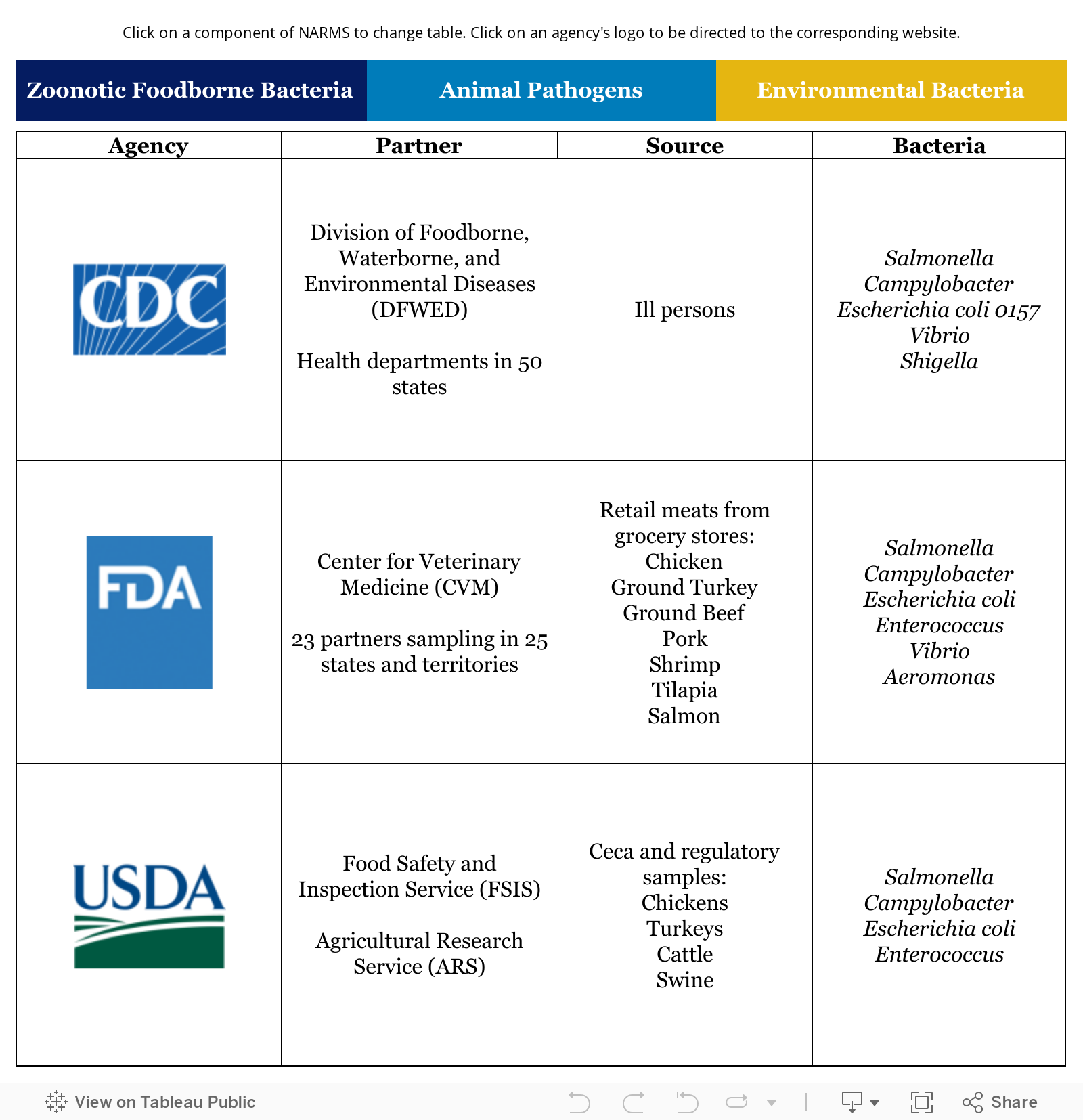
People using assistive technology such as a screen reader may not be able to fully access all permutations of the information available in the interactive displays. To gain alternate access to the information, you may download a spreadsheet containing the source data. People with disabilities who require further assistance may contact NARMS@fda.hhs.gov.
Why is antimicrobial resistance monitoring important?
Antimicrobial resistance monitoring is a fundamental component of any national One Health effort to combat antimicrobial resistant bacteria, including those in animals, foods, humans, and the environment. Monitoring is useful to:
- Document resistance levels in different sources (Baselines);
- Describe the spread of resistant bacterial strains and resistance genes (Spread);
- Identify temporal and spatial trends in resistance (Trends);
- Generate hypotheses about sources and reservoirs of resistant bacteria (Attribution);
- Understand the association between antimicrobial resistance (AMR) and antimicrobial drug use (AMU) practices and other drivers of resistance (Evolution);
- Identify risk factors and clinical outcomes of infections caused by antimicrobial resistant bacteria (Burden of illness);
- Identify interventions designed to limit resistance and to evaluate their effectiveness (Guidance for Industry 209) (Mitigation);
- Provide data for education on current and emerging hazards (Education);
- Guide evidence-based policies and guidelines to advance judicious antimicrobial use in veterinary medicine (Policy); and
- Support WHO and FDA in ranking the importance of antimicrobials, and risk analysis of foodborne antimicrobial resistance hazards in the pre-approval regulatory review of new animal antibiotics (Guidance for Industry 152) (Regulations).
What states participate in FDA NARMS?
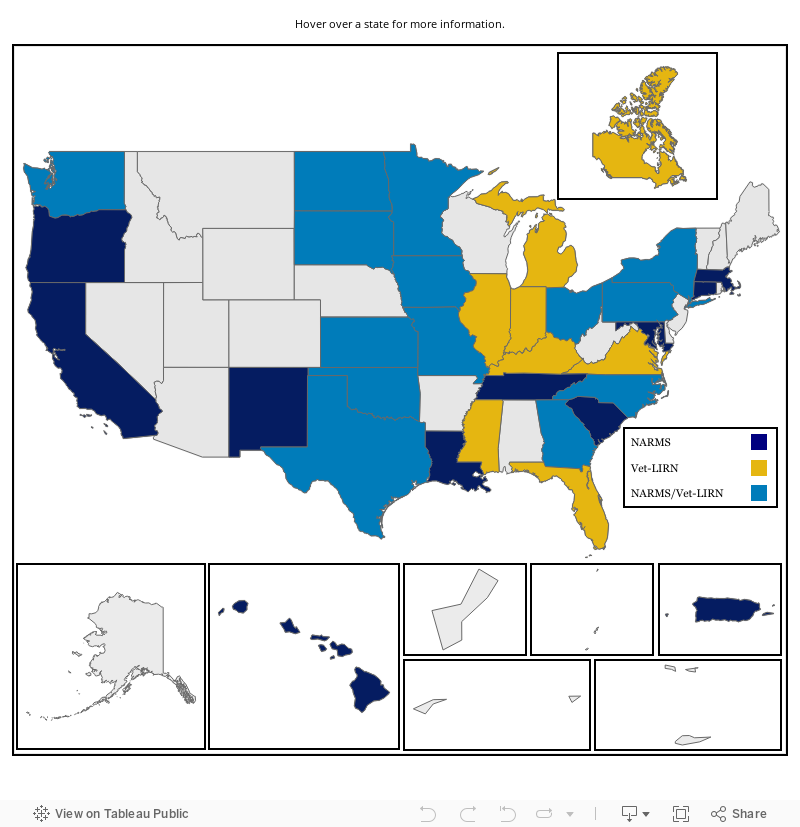
People using assistive technology such as a screen reader may not be able to fully access all permutations of the information available in the interactive displays. To gain alternate access to the information, you may download a spreadsheet containing the source data. People with disabilities who require further assistance may contact NARMS@fda.hhs.gov.
What does NARMS do?
NARMS collects antimicrobial susceptibility data in the form of minimum inhibitory concentrations (MICs), which indicate the lowest antibiotic concentration that stops bacterial growth. The higher the concentration of antibiotics needed, the more resistant the bacterium. This method is used by physicians and veterinarians to select antibiotics most likely to be successful in treating a patient’s illness.
NARMS also collects whole genome sequencing (WGS) data. Genomic surveillance reveals the genetic details of organisms, including the presence of genes and mutations causing antimicrobial resistance (AMR). NARMS research studies have shown a high correlation of AMR with the presence of known resistance determinants for most drugs. WGS is now routinely done in NARMS for Salmonella, Campylobacter, and E. coli and a substantial portion of animal pathogens tracked in NARMS. WGS data further our knowledge of resistance mechanisms and the origin of resistance development, co-selection pressure, and the role of mobile elements in spreading resistance genes. The WGS data provide comprehensive genomic data for outbreak investigations as well.
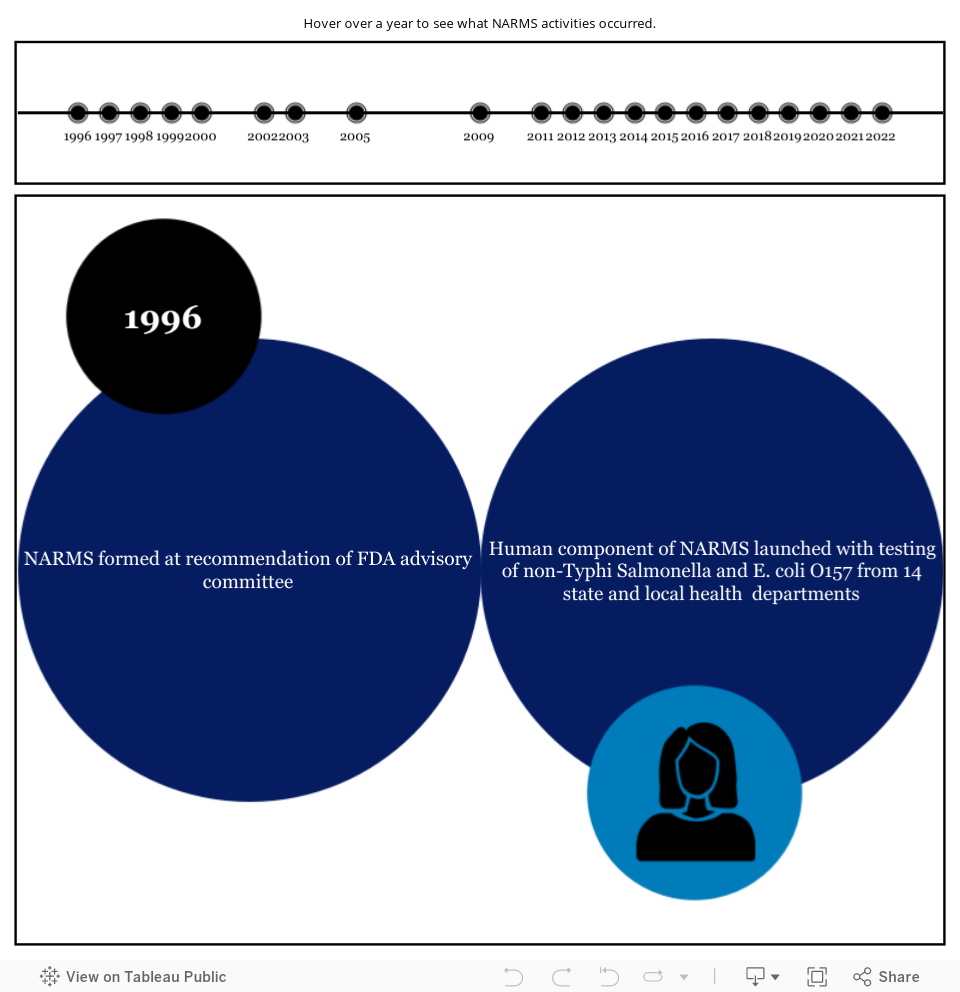
People using assistive technology such as a screen reader may not be able to fully access all permutations of the information available in the interactive displays. To gain alternate access to the information, you may download a spreadsheet containing the source data. People with disabilities who require further assistance may contact NARMS@fda.hhs.gov.
What Bacteria are Tested in NARMS?
NARMS monitors antibiotic resistance in the following four major foodborne bacteria: Salmonella, Campylobacter, Escherichia coli, and Enterococcus. CDC also conducts surveillance of resistance in Vibrio species other than V. cholera, the non-foodborne enteric organisms Shigella, and typhoidal Salmonella from humans. FDA also conducts surveillance of resistance among Aeromonas and Vibrio recovered from seafood, specifically salmon, shrimp, and tilapia. More information on these organisms can be found on the CDC website. Animal pathogens tracked by Vet-LIRN and NAHLN can be found at 2019 Animal Pathogen AMR Data.
How are NARMS data used?
Data generated in NARMS are made available for use by all stakeholders. This includes public health officials, policy makers, educators, food production industries, pharmaceutical companies, medical practitioners, consumer advocates, and federal regulators for a variety of purposes. NARMS data can be used to:
- Detect and track resistant infections and identify their sources;
- Understand how resistance emerges, persists, and spreads;
- Estimate how many resistant infections occur in the United States;
- Determine the health impact of resistant infections;
- Improve antibiotic prescribing and use;
- Educate consumers and industry about food safety;
- Help guide evidence-based action to limit or reverse worsening antibiotic resistance trends;
- Support risk analysis of foodborne antimicrobial resistance hazards when evaluating a new animal antibiotic for safety; and
- Measure the impact of new antimicrobial drug use policies and regulations that relate to the use of antibiotics in agriculture.
How are NARMS data shared?
The NARMS program uses several outlets to make the research and surveillance data accessible. All three NARMS agencies maintain websites with NARMS data and submit genomic data to the public database and the National Center for Biotechnology Information (NCBI).
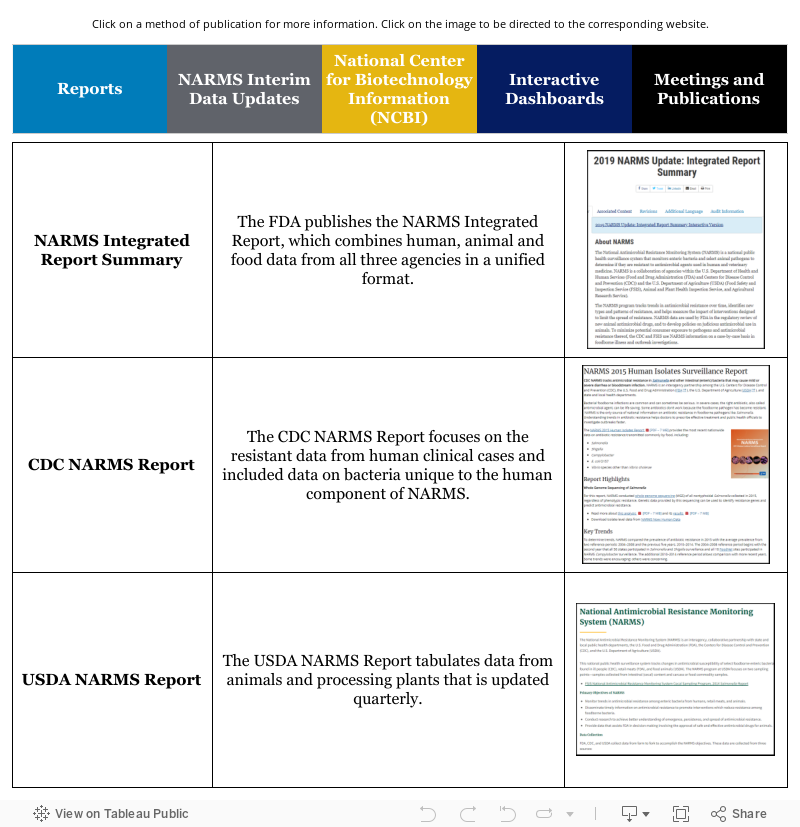
People using assistive technology such as a screen reader may not be able to fully access all permutations of the information available in the interactive displays. To gain alternate access to the information, you may download a spreadsheet containing the source data. People with disabilities who require further assistance may contact NARMS@fda.hhs.gov.